Innovative Drone Thrust Stands enhance UAV Performance
Tyto Robotics has developed advanced drone thrust stands that were instrumental for the University of Toronto Aerospace Team (UTAT) during the SAE Aero Design competition, which focuses on designing unmanned aerial vehicles (UAVs) for wildfire response operations.
Mission requirements and Aircraft Design
A critical component of the mission involves a secondary drone that detaches from the primary UAV mid-flight to autonomously deliver its payload to a designated location.
Dynamic Testing with the Series 1580 Thrust Stand
UTAT utilized the Series 1580 thrust stand for dynamic thrust assessments within the 0.3 m x 0.3 m wind tunnel at the University of Toronto Institute for Aerospace Studies (UTIAS).
These evaluations provided the team with crucial insights into how thrust and propulsion system efficiency varied with different airspeeds and motor RPMs, simulating various operational scenarios throughout the mission.
In-House Validation for Enhanced Confidence
While manufacturers typically offer performance estimates for motors and propellers, the Series 1580 thrust stand was essential for obtaining in-house validation data, bolstering the team’s confidence in the aircraft designs.
Participation in the AEAC Competition
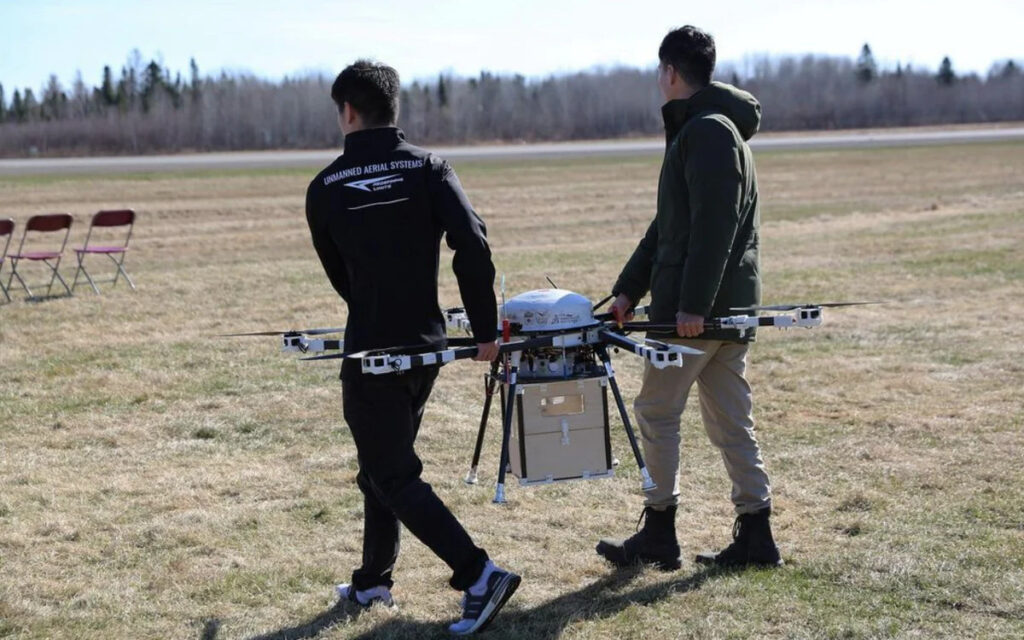
Along with the SAE competition, UTAT also took part in the Aerial Evolution Association of Canada (AEAC) competition. This year’s project, named Cyclone, featured a 14 kg hexacopter designed for urban air mobility applications. To maximize endurance for the competition, the team employed the Tyto Robotics Series 1580 to analyze various motor and propeller combinations, focusing on their efficiencies and current consumption.
Post-Flight Evaluations and Recovery
The thrust stand proved invaluable not only for selecting propulsion components but also for post-flight assessments. Following several crashes during testing, the thrust stand was utilized to identify which motors remained operational and to detect those exhibiting excessive vibration. This capability allowed the team to quickly recover from each incident and continue safe flight testing.
Read the original article >>