

Collaboration Between Teledyne Marine and Kongsberg Finding: A New Era in Underwater Research
Teledyne Marine and Kongsberg Discovery have joined forces to enhance underwater exploration by integrating the Kongsberg EK80 WBT Mini Scientific echo sounder into the Teledyne Slocum G3s Glider. this innovative partnership will be showcased at oceanology International 2024 in London from March 12-14.
Overview of the EK80 WBT Mini
The Kongsberg EK80 WBT Mini is a streamlined version of the advanced wide Band Transceiver (WBT) utilized by marine research vessels globally. Its compact design and energy-efficient features make it an ideal fit for subsea platforms like the Slocum Glider. This scientific echo sounder is instrumental in detecting and quantifying various underwater targets, including fish, plankton, bubbles, oil droplets, and physical oceanographic phenomena such as turbulence.
Understanding the Slocum G3 Glider
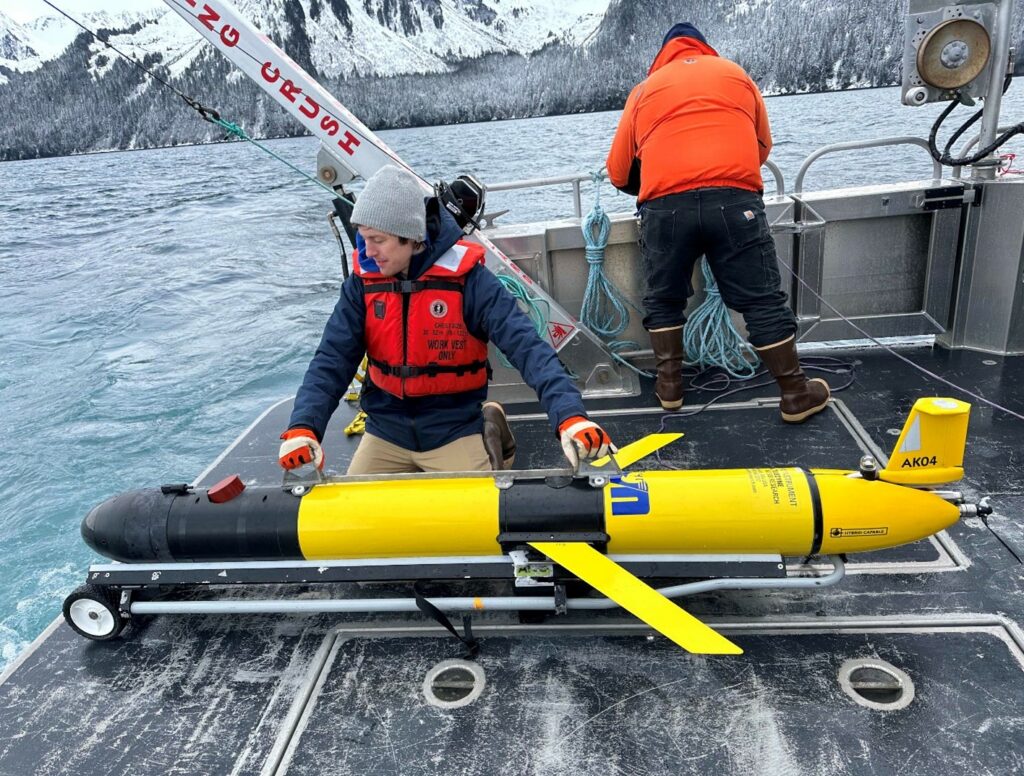
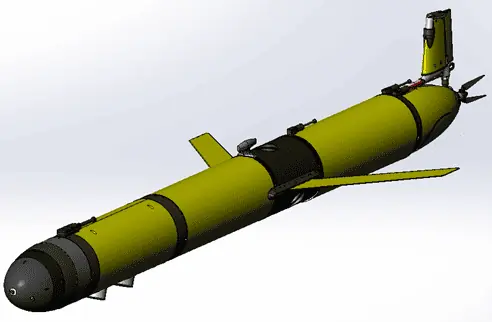
The Slocum Glider stands out as one of the most widely used autonomous gliding platforms. This subsea vehicle employs buoyancy changes to navigate through water efficiently, enabling it to monitor the ocean’s water column continuously for extended periods. It transmits collected data to shore via an Iridium satellite connection. Slocum Gliders are versatile,serving a diverse array of missions for oceanographers,fisheries,energy producers,and military applications.
Applications of the EK80 Echo Sounder
Equipping the Slocum Glider with the EK80 echo sounder opens up numerous possibilities across various fields, including:
- Fisheries Research
- Biological Oceanography
- Chemical Oceanography
- Environmental Monitoring
- And more
Technical integration Details
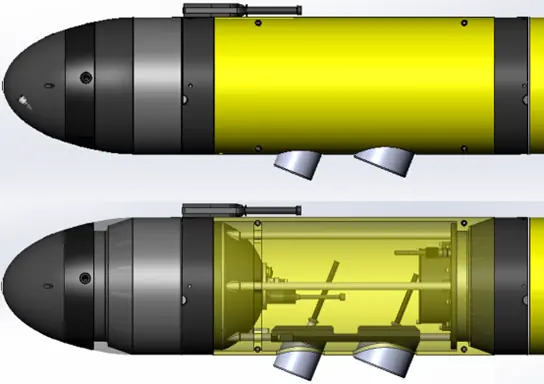
The integration of the EK80 into the Slocum Glider involves housing the WBT Mini electronics within a pressure vessel located in front of the glider’s buoyancy engine, just behind the sonar dome. Two transducers are positioned in a flooded wet bay between this pressure vessel and the glider’s front section. Users can choose from transducer frequency options of 120kHz / 200kHz or 200kHz / 333kHz, with configurations for either upward or downward facing.
This technological synergy facilitates extensive data collection on acoustic target density and distribution throughout a designated water column. It enables researchers to assess how climate change, environmental shifts, or anthropogenic influences impact aquatic ecosystems, especially when combined with other sensors on the glider that gather biogeochemical and physical ocean data.
Successful Past Deployments
Teledyne has previously implemented the EK80 on its Slocum Glider for various clients, achieving notable success. As a notable example,the University of Alaska Fairbanks has deployed its glider,named Gretel,multiple times with the EK80,yielding valuable insights for fisheries research. This collaboration formalizes and streamlines the integration process. initial sales of this new echo sounder package have already begun, with scientists from Akvaplan-niva in Norway and the University of Delaware placing orders for delivery in the summer of 2024.
“The integration of the EK80 scientific echo sounder into the Slocum G3 glider will enable us to gather unique data that describes the biological structure and functioning of the pelagic ecosystem across various depths,” stated Lionel Camus, Manager of Digital Solutions at Akvaplan-niva.
“Our marine scientists are eager to equip their Slocum G3 with the echo sounder alongside the underwater vision profiler (UVP6) to study the ‘super swarm’ of Calanus finmarchicus in the Norwegian Sea. this new capability will unlock additional applications in marine science,” he added.
“This technology integration is poised to significantly enhance the research capabilities of Slocum Gliders,” remarked Dr. Matt Oliver, Professor of Marine Science and Policy at the University of Delaware.
“Kongsberg Discovery is thrilled to announce the integration of the EK80 scientific echo sounder into the Teledyne Slocum Glider,facilitating the collection of long-term datasets on acoustic scattering and other environmental variables for academic,military,and commercial purposes,” said a representative from Kongsberg Discovery.
“This partnership between Kongsberg Discovery and teledyne Marine offers a unique and essential solution for acquiring high-resolution data at depth,” noted Scott Loranger, acoustician and Applications Scientist at Kongsberg Discovery.
“By deploying high-resolution, high-frequency echo sounders deep underwater, we can identify, classify, and quantify a diverse range of targets that traditional shipboard echo sounders cannot reach,” he added.
“We at Teledyne are incredibly excited to officially offer the Kongsberg EK80 as a sensor option on the Slocum Glider,” stated Shea Quinn, Product Line Manager for the Slocum Glider at Teledyne Marine.
“The slocum Glider provides a unique platform for EK80 users to collect long-term echo sounder data throughout the water column at a more affordable price compared to traditional research vessels. The combination of the EK80 with other sensors on the Slocum will enable users to gain a thorough understanding of their operational areas,” he concluded.
Teledyne Marine and Kongsberg Discovery will both be present at the Oceanology International 2024 conference in London from march 12-14.