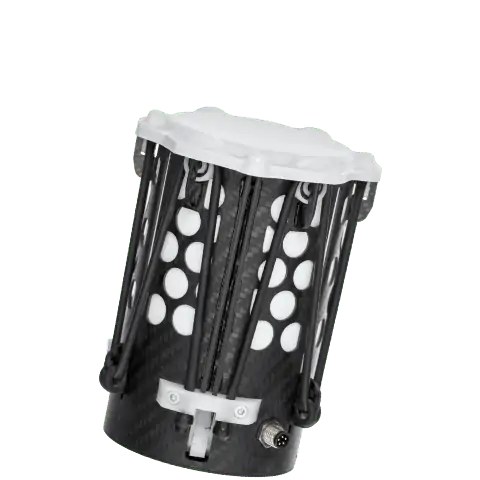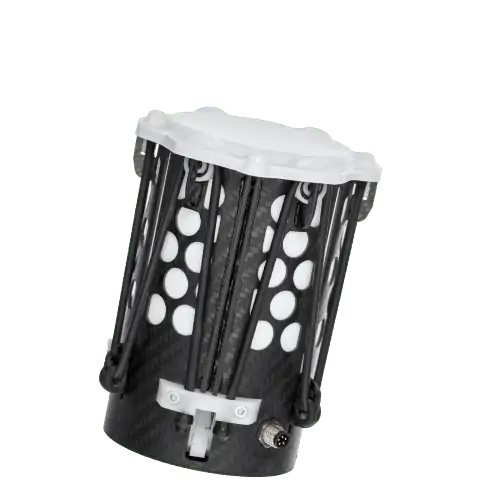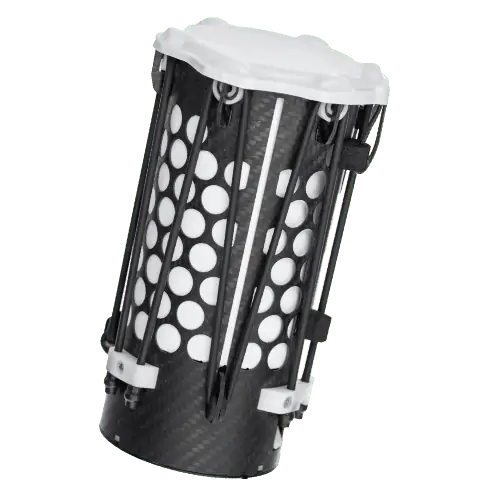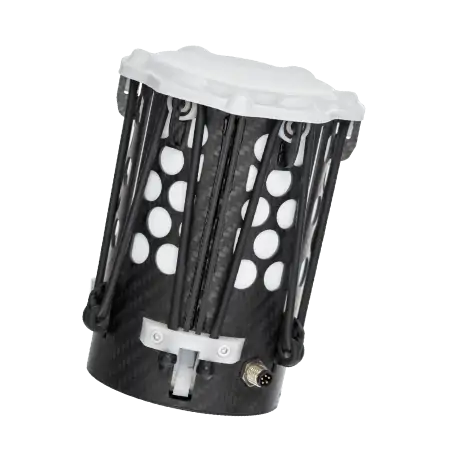


Black Swift Technologies (BST) has recently secured a contract with the National Oceanic and Atmospheric Administration (NOAA) to create an air-deployed unmanned aircraft system (UAS) aimed at conducting lower boundary layer observations in challenging atmospheric conditions typical of convective storms, such as hurricanes and tropical cyclones.
The proposed system, named the S0 Air-deployed UAS, is designed to be launched from an aircraft, including NOAA’s Lockheed P3 Orion.This innovative UAS is engineered to replicate the functionality of radio dropsondes currently utilized by NOAA, thereby alleviating the operational burden on personnel while aligning with existing operational frameworks. BST aims to deliver a cost-efficient, air-launched UAS that enhances measurements of pressure, temperature, humidity, and sea surface temperature, alongside 3D wind data. The S0 UAS is capable of intelligent and autonomous extended sampling, allowing for over an hour of targeted observations where the aircraft can autonomously navigate based on atmospheric sensor inputs.
A crucial aspect of this initiative is BST’s implementation of the Airborne Vertical Atmospheric Profiling System (AVAPS) for long-range data transmission, ensuring reliable communication at the operational ranges established for dropsondes. The AVAPS system allows for data to be transmitted without requiring additional command and control links post-release. The UAS is designed to be deployed near the ocean surface and the stormS eyewall to gather vital data. BST has developed specialized avionics that enable the UAS to operate autonomously in turbulent conditions while integrating essential components for 3D wind sensing, along with connections to the RD-41 sonde and radio. Given that the vehicle is not intended for recovery, it is indeed critical that all data is transmitted in real-time during its flight.
“The devastating impact of hurricanes,notably those like Florence and Michael in 2018,underscores the importance of hurricane forecasting for scientists dedicated to predicting the trajectories and intensities of these storms,” remarks Jack Elston,Ph.D., CEO of Black Swift Technologies. “Our approach utilizes proven technology and communication protocols that NOAA has validated, while our streamlined design minimizes aircraft costs, allowing for the deployment of multiple units for each storm. This significantly enhances both the volume and precision of the data collected.”