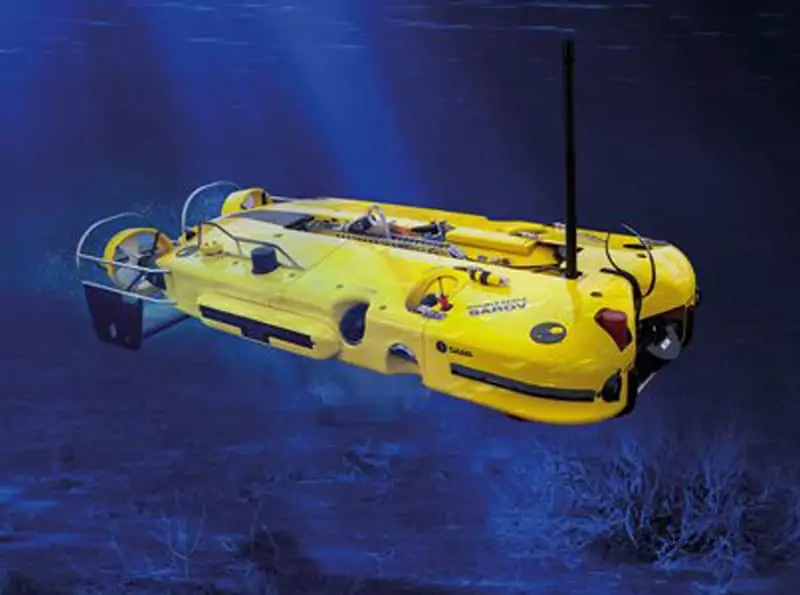


This case study highlights how Sonardyne enabled L3Harris to enhance the navigation capabilities of its Iver3 AUV for Special Order surveys through the integration of the Mini-Ranger 2 Ultra-Short BaseLine (USBL) and AvTrak 6 systems.
Identifying the Challenge
The demand for underwater surveys in coastal regions has surged, driven by the global transition towards renewable energy sources. this trend shows no signs of abating, yet the costs associated with these surveys remain a significant concern.
To mitigate expenses, surveyors are exploring innovative methods to efficiently cover larger seabed areas using smaller Autonomous Underwater Vehicles (AUVs). These compact AUVs not only lower operational costs by necessitating smaller support vessels and fewer personnel but also contribute to a reduced carbon footprint.
This includes special Order standard surveys, as classified by the international Hydrographic Institution (IHO), which are ofen required for pre- and post-installation assessments of underwater power cables and unexploded ordnance (UXO) surveys.
In shallower waters,achieving the precise positional accuracy needed for Special Order surveys typically necessitates the use of ship-mounted sensors,relying on the vessel’s RTK/GNSS positioning.
Conversely, deeper waters frequently enough require larger, heavier auvs that depend on a Doppler Velocity Log (DVL) and an Inertial Navigation System (INS), which in turn demand support from substantial vessels.
Imagine if it were possible to conduct Special Order surveys in shallower coastal waters using smaller,cost-effective AUVs,thereby decreasing reliance on large vessels and minimizing logistics,emissions,and operational expenses.
This was the challenge presented by L3Harris’s clients, who were eager to utilize their Iver3 AUV for Special order surveys.
Their goal was to determine whether USBL-aided navigation could achieve the necessary accuracy for Special Order surveys while adhering to the size, weight, and power constraints of a lightweight AUV platform like the 5.8-inch diameter Iver3.
Success in this endeavor would enable underwater operations exceeding eight hours, ushering in a new era of cost-effective coastal surveys.
Implementing the Solution
L3Harris had previously employed the Mini-Ranger 2 for USBL assistance with an iXblue Phins INS on another project involving the Iver3.
The Mini-Ranger 2 is ideally suited for coastal operations, capable of tracking up to 10 targets concurrently at depths of up to 995 meters (extendable to 4,000 meters) while also facilitating data collection. It delivers high performance without the complexity and expense associated with larger deep-water USBL systems.
Central to this system is the HPT 3000, a robust surface-deployed USBL transceiver optimized for shallow water, high elevation, and long layback scenarios, and also data telemetry.
To enable INS assistance, L3Harris integrated the AvTrak 6 OEM Nano, featuring a remote transducer, into their Iver3.
The AvTrak 6 OEM Nano is the most compact version of the AvTrak transceiver, designed for seamless integration into smaller underwater vehicles. It combines transponder,transceiver,and telemetry functions,facilitating dialog,tracking,and USBL assistance for subsea robotics. Built on the 6G hardware platform, it is compatible with all Sonardyne USBL, LBL, and INS systems, enhancing adaptability and performance, especially when paired with a Sonardyne INS.
As in the previous project, the AvTrak 6 was programmed to communicate effectively with the third-party IXBLUE Phins INS by transmitting an APOS PSIM SSB telegram instead of the proprietary SPOS. The AvTrak 6 transducer was also mounted on a specially designed post for the Iver3, allowing for easy integration into the AUV and any other Iver3 units.
The Mini-Ranger 2 was mounted on the support vessel with hemisphere GPS for accurate topside positioning.
Evaluating the results
L3Harris conducted a survey spanning less than 5 kilometers,consisting of six 800-meter legs,in challenging waters less than 20 meters deep in Narragansett Bay,located on the northern side of Rhode Island Sound.
Real-time USBL assistance enhanced survey accuracy by over 7 meters at the far end of the survey legs during turns. Throughout the survey, performance ranges of up to 800 meters were tested, with USBL position standard deviations between 1 and 3 meters.
Additionally, utilizing the Mini-Ranger 2’s robotics pack, the L3Harris team equipped the vehicle with data on the acoustic surroundings, enabling its autonomy to adjust the AvTrak 6 OEM Nano’s power and gain settings to optimize acoustics without human intervention.
“The real-time enhancements in navigational position accuracy were remarkable, providing a significant capability to improve survey precision using small UUVs,” stated Morgan Eash, Applications Engineering Manager at L3Harris AUV Systems. “The standard deviation of the USBL position fixes was accurate, allowing for real-time updates to the INS. The operational simplicity of using the Mini-Ranger 2 topside to monitor environmental factors throughout the survey also added a layer of safety for the UUV.”
“This setup enables surveyors to comply with Special Order navigation standards, which is crucial for small Unmanned Underwater Vehicles (UUVs),” remarked John sloat, Request Engineering Lead at L3Harris. “Previously, the limited space within smaller UUVs made it challenging to accommodate the necessary onboard technology for Special Order navigation. now, this capability significantly enhances survey efficiency by reducing the frequency of surfacing for position fixes, thereby extending vehicle endurance, minimizing the risk of entanglement or loss, and allowing for broader survey areas. Moreover,real-time vehicle positioning data can be further refined during post-processing,which is invaluable for survey clients and marks the dawn of a new era in UUV surveying.”
The support from Sonardyne’s experts was also immensely beneficial to the L3Harris team.
“The level of assistance and service from Sonardyne has been outstanding,” John added.“We are extremely satisfied. The integration experience has been extraordinary at every stage, significantly reducing our risks through this partnership.”