

Innovative Sonardyne Technology Facilitates Remote Data Acquisition in the Gulf of Mexico
A fleet of Sonardyne’s Origin 65 Acoustic Doppler Current Profilers (ADCPs) and Current Pressure Inverted Echo Sounders (CPIES) has been strategically positioned on the seabed of the Gulf of Mexico.
these advanced instruments are tasked with collecting extensive data on the Loop Current System (LCS), a notable oceanic current that affects marine ecosystems, underwater operations, and the severity of hurricanes. Gaining insights into it’s behavior is crucial for oceanographers and various industries operating in this area.
Collaboration for Enhanced data Collection
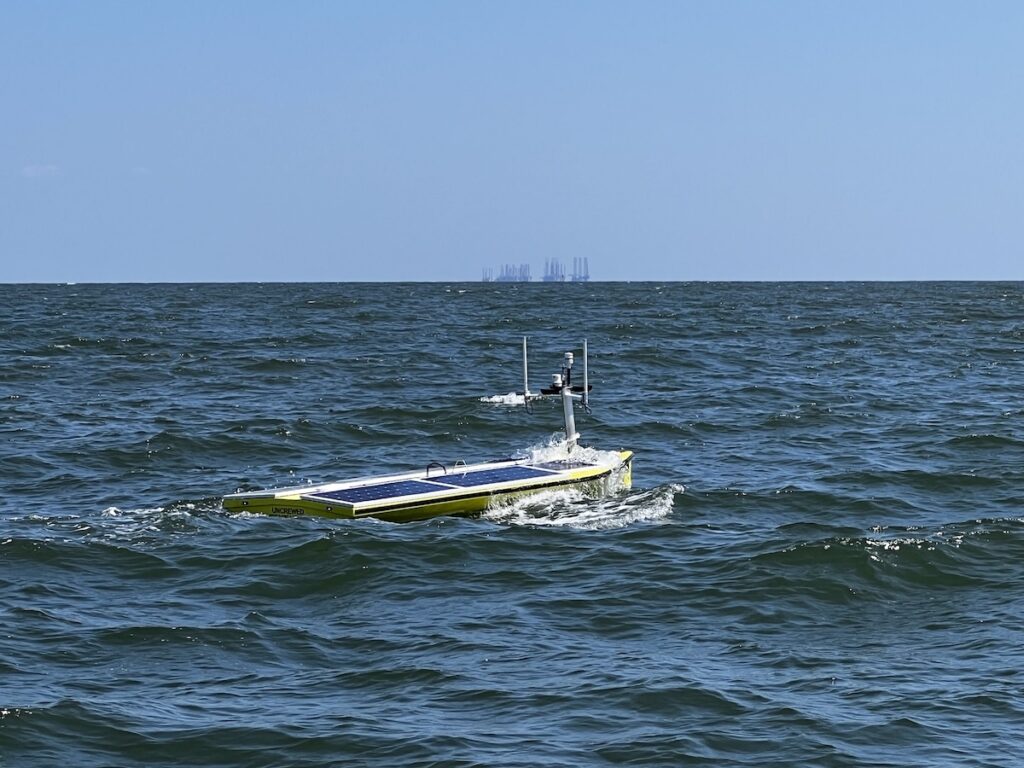
In a bid to optimize data collection, Sonardyne collaborated with SeaTrac Systems, employing their SP-48 Uncrewed Surface Vehicle (USV) outfitted with a Sonardyne HPT 7000L transceiver. This setup enabled the USV to wirelessly communicate with the ADCPs and CPIES, successfully retrieving data over a remarkable 580-nautical-mile route. The fully autonomous operation eliminated the necessity for manned vessels, leading to substantial cost savings, reduced risks, and a lower environmental footprint.
Technological Advancements in Deep-Sea Monitoring
Sonardyne’s state-of-the-art technology is pivotal in enabling remote access to deep-sea instruments. the Origin 65 ADCPs deliver accurate current measurements, while the CPIES units gather critical data on pressure, temperature, and acoustic travel times, enriching the understanding of the LCS.
Aidan Thorn, Sonardyne’s Business Progress Manager for Marine Robotics, remarked, “Utilizing a fully solar-powered USV for a data collection operation of this magnitude marks a significant milestone in marine robotics. The gulf of Mexico poses some of the most formidable ocean currents for any vessel, especially an uncrewed one.SeaTrac’s commitment to overcoming these challenges made them an ideal partner, and we are thrilled with the outcomes.”
“USVs serve as excellent platforms for gathering data from our seabed nodes and profilers through the integration of our acoustic communication technologies. We anticipate further collaboration with SeaTrac on this project and possibly many more in the future.”
Future Data Collection Plans
Over the next 18 months, three additional data sets will be collected using the same uncrewed methodologies before the project reaches its conclusion.
Hobie Boeschenstein, Director of Operations and Business Development at SeaTrac, expressed, “we are excited to have partnered with Sonardyne on this initiative. Our SP-48 USV offers a extensive system for maritime observation, data collection, and reconnaissance.”
“Powered by solar energy and equipped with high-capacity batteries, it is capable of operating in both near-shore and offshore environments under various weather and sea conditions, as demonstrated by this mission. It can conduct missions ranging from several hours to several months and is designed to accommodate a diverse array of customer payloads. Sonardyne’s technology and corporate beliefs align perfectly with ours, and we look forward to supporting them in numerous future endeavors.”