

Groundbreaking Discovery: Prickly Shark sighting in French Polynesia
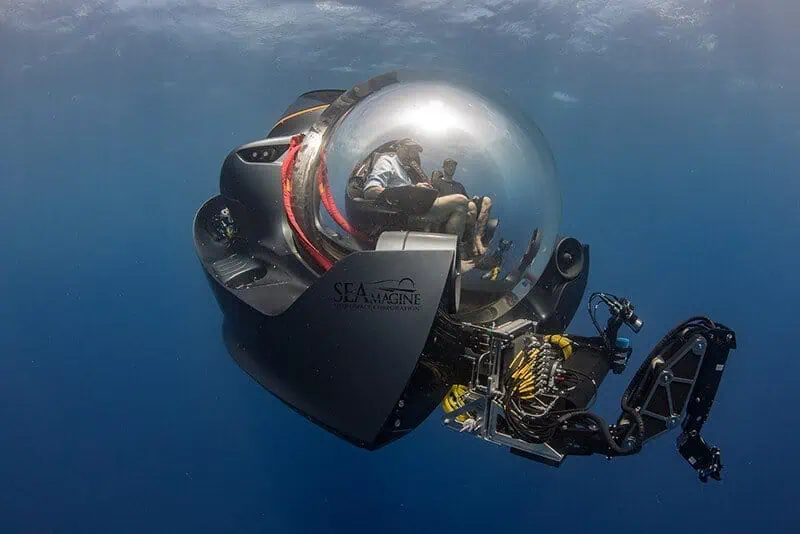
A routine training dive transformed into a remarkable scientific milestone when a SEAmagine Aurora submersible, equipped with a SubC Imaging 1Cam Mk6 deep-sea camera, recorded the first-ever sighting of a prickly shark in french Polynesia.
This critically important observation occurred at a depth of 500 meters near Moorea Island, highlighting the crucial role of advanced submersible technology in deep-sea research.
seamagine Hydrospace Corporation: pioneers in Deep-Sea Exploration
Since its inception in 1995, SEAmagine Hydrospace Corporation has been a leader in the field of personal submersible manufacturing.The company specializes in creating submersibles that accommodate two to seven individuals, with their technology being utilized across various sectors, including scientific research and private exploration.
With over 12,000 dives conducted at depths ranging from 100 to 2,300 meters, SEAmagine’s submersibles have played a vital role in unraveling the mysteries of the ocean. The Aurora submersible, which facilitated this groundbreaking discovery, exemplifies the company’s dedication to innovation, providing a stable and agile platform for deep-sea observation.
Advanced Imaging Technology for Unmanned Vehicles
The SubC Imaging 1Cam Mk6, used in this discovery, is not only effective for manned submersibles but also serves as a powerful imaging tool for unmanned underwater vehicles like ROVs and AUVs. Its robust design and superior imaging capabilities make it ideal for remote deep-sea exploration,scientific research,and industrial inspections,ensuring that even the most challenging underwater environments can be effectively monitored and documented.
A Rare Encounter: The Prickly Shark at 500 Meters
During a training dive aboard a private yacht, the SEAmagine team encountered a mature male prickly shark (Echinorhinus cookei) on the outer slope of the barrier reef near Moorea. This sighting represents the first documented presence of this species in French Polynesia.
The importance of this finding was acknowledged in the peer-reviewed journal Cybium, The International Journal of Ichthyology, in a paper titled “first record of prickly shark Echinorhinus cookei (Pietschmann, 1928) (Chondrichthyes: Echinorhinidae) in French Polynesia (Eastern Tropical Pacific)”.
Insights into the Prickly Shark
The prickly shark,a member of the Echinorhinidae family,is a slow-moving deepwater species characterized by its thorn-like dermal denticles and two small dorsal fins. These sharks can grow up to four meters in length and typically inhabit depths ranging from 11 to 580 meters, primarily being nocturnal.Due to their susceptibility to deep-sea trawling and longline fishing, the species is classified as Near Threatened by the International Union for Conservation of nature (IUCN).
High-Performance Imaging: A Game Changer in Oceanography
The SEAmagine aurora submersible utilized in this discovery was equipped with the SubC 1Cam Mk6, a sixth-generation subsea camera capable of operating at depths of up to 6,000 meters. With a 20x optical zoom lens, the 1Cam Mk6 delivers high-resolution 4K and HD video recordings, along with 16.6MP digital still images. Its ability to transfer footage and data in real-time via USB ensures immediate access for researchers, emphasizing the significance of high-quality imaging in oceanographic studies.
the Impact of Citizen Science on Marine Research
Manned submersibles,such as those designed by SEAmagine,are not solely for professional scientists; they are increasingly accessible to private individuals who contribute to marine research through citizen science initiatives.
The presence of submersibles on private yachts allows for unprecedented access to remote and underexplored ocean areas, fostering new discoveries and enhancing scientific collaboration.
Citizen science—the active involvement of non-professionals in scientific research—has played a crucial role in expanding marine knowledge for centuries.From 19th-century sailors documenting ocean currents to contemporary deep-sea explorers, public engagement continues to shape our understanding of the underwater realm. With submersibles providing direct, immersive observation capabilities, their role in advancing marine biology and conservation is expected to grow significantly.
Conclusion: The Future of Marine Exploration
the sighting of the prickly shark in French Polynesia highlights the transformative potential of cutting-edge submersible technology in marine exploration. As more vessels incorporate advanced imaging systems and data-sharing capabilities, discoveries like this will become increasingly frequent, offering invaluable insights into the hidden depths of our oceans.SEAmagine’s commitment to innovation and exploration ensures that the next scientific breakthrough could be just one dive away.
For further details, read the original article or visit the SubC Imaging website.