

the urgency for accurate monitoring of marine species is escalating as climate change continues to effect Arctic and North Pacific ecosystems.
At the forefront of this initiative is the University of Alaska Fairbanks (UAF) College of Fisheries and Ocean Sciences, which is leveraging cutting-edge unmanned technologies to monitor essential species such as salmon and commercial crabs.
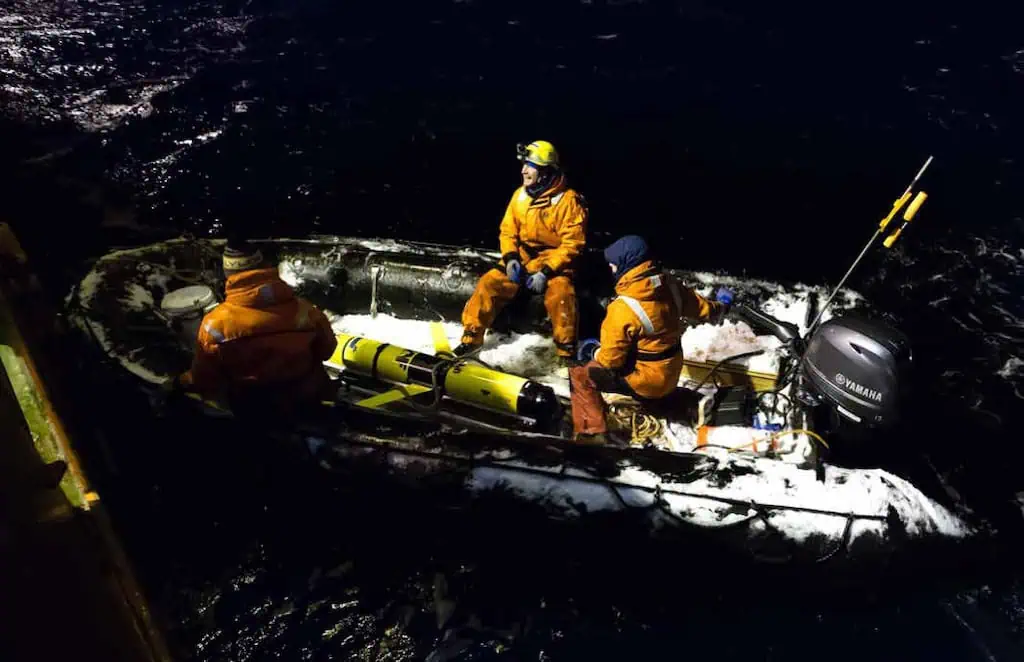
A pivotal component of these efforts is the Teledyne Webb Slocum Glider, an autonomous underwater vehicle (AUV) that is revolutionizing data collection and analysis in these demanding environments.
Teledyne slocum Glider: Leading the Charge in Autonomous Research
The Teledyne Slocum Glider is distinguished in marine research for its adaptability and durability. created by the UAF Autonomous Underwater Vehicle Glider Lab, this AUV is outfitted with advanced sensors, including acoustic receivers and cutting-edge navigation systems.
These capabilities make it an essential asset for tracking and monitoring marine species, directly contributing to UAF’s mission to bolster Alaska’s blue economy. The Glider’s autonomous operation over extended durations enables it to collect real-time environmental data crucial for the lasting management of commercial fisheries.
Salmon Tracking in Alaska’s Northern Waters
One of the primary uses of the Glider is tracking salmon, a species that is critical to both the ecosystem and the economy of northern Alaska. Operating in the Bering Sea and the Gulf of Alaska, the Glider autonomously navigates these waters, gathering signals from tagged salmon.
this facts is vital for ecological preservation and fisheries management, offering insights that are essential for maintaining sustainable salmon populations in an ever-evolving environment.
Assessing the Health of Commercial Crab Populations
Beyond salmon, the Glider is instrumental in monitoring commercial crab populations, which are basic to Alaska’s fishing sector. Utilizing advanced imaging and sonar technology, the Glider surveys the seabed, providing valuable data that assists fisheries managers in making informed decisions regarding catch quotas and conservation measures.
Sustainable management of crab populations is crucial not only for the economic viability of the industry but also for maintaining the overall balance of marine ecosystems in the region.
The Future of Marine Research with Autonomous Technology
The incorporation of the Teledyne Slocum Glider into UAF’s research toolkit signifies a transformative phase in marine biology and fisheries management in the Arctic. Its ability to function autonomously in extreme conditions, combined with its sophisticated sensor array, has changed the landscape of how researchers monitor marine life and commercial fisheries.
As the global ocean economy continues to expand, the insights generated by the Glider will be crucial in guiding sustainable practices, ensuring that Alaska remains a leader in marine research and conservation initiatives.
This groundbreaking work by the University of Alaska fairbanks underscores the essential role of unmanned systems in the future of marine research, where precision, adaptability, and sustainability are of utmost importance.
With innovative tools like the Teledyne Slocum Glider, researchers are more equipped than ever to confront the challenges posed by the Arctic’s dynamic and frequently enough unpredictable waters.