

CHC Navigation (CHCNAV), a prominent provider of GNSS and inertial navigation technologies for professional mapping and geospatial applications, has published an insightful article addressing
the challenges of Geographic Facts System (GIS) data accuracy, the company’s innovative solutions, and the effective methods and advantages of GIS data collection.
GIS plays a crucial role in representing spatial data through coordinates, time markers, and related attributes. The precision of GIS data is vital for distinguishing assets and ensuring up-to-date spatial information, which is essential for utility management, urban planning, and environmental studies. The timeliness of data is a pressing issue,with around 20% of GIS data becoming outdated within a year,potentially jeopardizing the reliability of data-driven decisions.
The Importance of GIS Data Accuracy
Accurate GIS data is indispensable for managing infrastructure within utility sectors. Knowing the precise locations of pipelines can substantially reduce the risk of damage during excavation, leading to considerable cost savings. Studies indicate that utilities can lower maintenance costs by as much as 30% by utilizing dependable GIS data. In urban planning, GIS-informed strategies have shown the potential to cut urban expansion expenses by 20%. Environmental research heavily depends on GIS data for tracking land use and vegetation changes, with GIS-enhanced deforestation monitoring improving conservation efforts by 15%.
Technical Hurdles in GIS Data Accuracy
Ensuring the accuracy and currency of GIS data involves several technical challenges:
-
data Compatibility: Discrepancies frequently enough occur due to incompatibility between centralized GIS systems and field data collection tools.
-
Equipment Expenses: Supplying high-quality, durable equipment to all field staff can be a important financial burden.
Recent Innovations in Technology
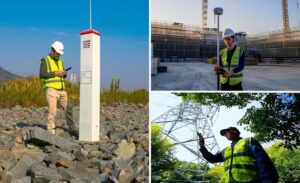
GIS data collection, mapping, and landscaping using CHCNAV’s tablets, smartphones, and smart antennas.
to tackle these challenges, CHCNAV launched the MapCloud software on May 2, 2024. This GIS data collection and mapping application, tailored for Android devices, is optimized for use with CHCNAV’s LT800H Rugged Tablet or LT60H Rugged GNSS RTK Smartphone. This integrated solution aims to resolve data compatibility issues and equipment cost challenges, offering a thorough toolkit for GIS professionals.
Strategies for Collecting and Sustaining GIS Data
-
Field Surveying: The traditional method employs GNSS RTK technology for precise spatial coordinate measurement, ideal for tasks like pipeline inspections and construction projects.
-
Mobile Data Collection: Utilizes handheld GPS devices and smartphones for on-site geographic data gathering, particularly effective for distributed tasks such as forestry monitoring and utility inspections.
-
Remote Sensing: Involves large-scale image acquisition through aerial photography, satellite technology, and LiDAR, enabling extensive data capture for applications like land cover mapping and environmental monitoring.
These methods can be combined to address specific data collection requirements, enhancing efficiency and cost-effectiveness through data integration and unified collection strategies. this integration supports comprehensive,up-to-date GIS datasets that are crucial for informed decision-making and operational efficiency.
Specialized GIS data collection solutions provide numerous benefits over conventional surveying techniques. while traditional surveying focuses on high-precision coordinate accuracy for applications like cadastral surveying,GIS data collection incorporates detailed attribute information such as pipeline pressure levels or vegetation health. These solutions improve mobile workforce efficiency and data security through real-time device tracking, rugged hardware with IP67 ratings, and advanced software security featuring multiple encryption methods and robust backup systems.
Productivity is maximized through user-friendly interfaces with integrated tutorials and basemap integration, as well as high-performance engines that support common GIS file formats and efficient handling of large datasets. Flexible accuracy solutions cater to diverse needs, ranging from consumer-grade GNSS for meter-level accuracy to professional-grade devices offering sub-meter to centimeter precision.
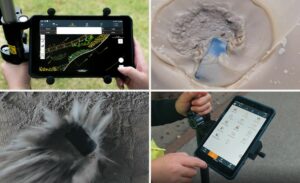
Surveying and landscaping with the LT800, a robust Android tablet designed for professional applications requiring meter-level GNSS positioning and consistent performance.
Collaborative features are enhanced through cloud connectivity, enabling seamless data sharing and project management. This includes layer template sharing and inter-device file transfer,ensuring all team members have access to the most current data.
when comparing professional-grade and consumer-grade solutions, professional devices offer advantages in durability, display quality, battery longevity, and positioning accuracy. However, the choice ultimately depends on balancing these benefits against cost considerations and specific project needs.
CHCNAV’s integrated solution, which includes MapCloud software and professional-grade Android devices like the LT800H Rugged Tablet and LT60H Rugged GNSS RTK Smartphone, exemplifies a holistic approach to modern geospatial data collection and management.This system addresses various accuracy requirements, enhances team collaboration, and provides robust security features, empowering GIS professionals to meet the demands of contemporary geospatial tasks with precision and confidence.
Explore the complete article here, or visit the CHCNAV website for more information.