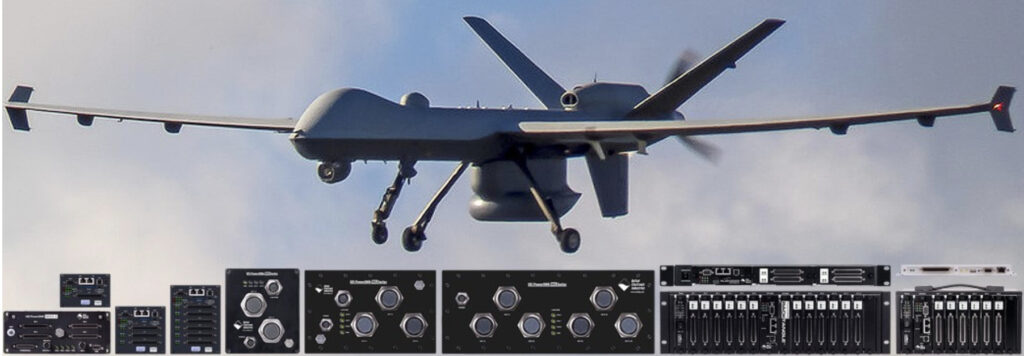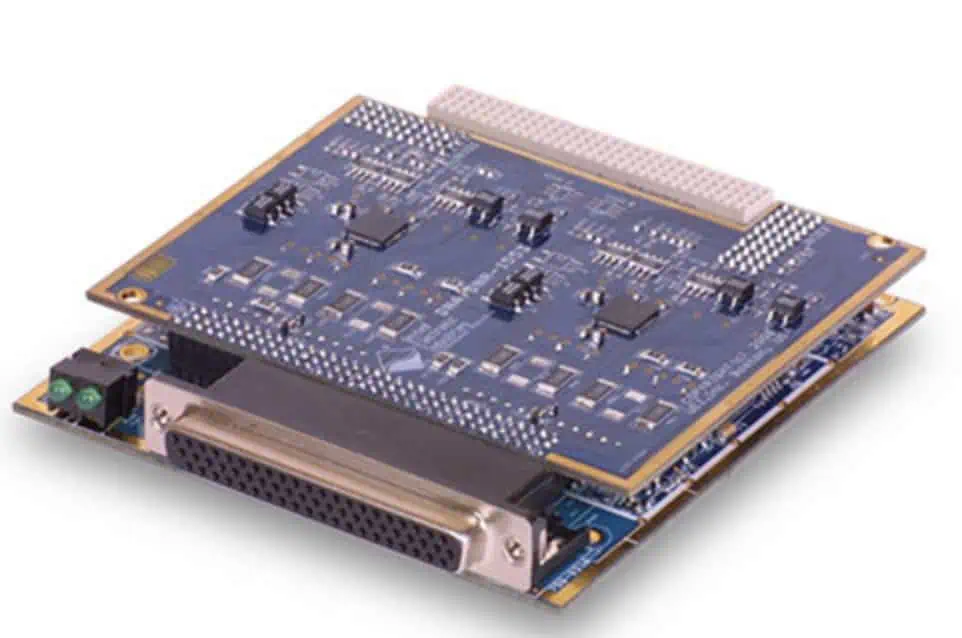


United Electronic Industries (UEI) has published an insightful article detailing how the integration of Time Sensitive Networking (TSN) and data Distribution Services (DDS) facilitates the progress of interconnected systems, such as unmanned aerial vehicles (UAVs) and robotic platforms, ensuring Quality of Service (QoS) for essential data streams.
In today’s landscape, unmanned aerial vehicles and intricate military systems are becoming increasingly prevalent. These interconnected frameworks utilize a multitude of sensors, computers, and actuators, which can complicate network communication. To support such automation, avionics systems necessitate deterministic communication that operates within a defined timeframe, alongside assured, precisely timed system control.
This is where the synergy of Time Sensitive Networking (TSN) and Data Distribution Services (DDS) becomes crucial. TSN enhances deterministic communication, allowing engineers to create distributed avionic systems that can specify and enforce Quality of Service (QoS) for vital data streams.
TSN operates at a lower network layer (Layer 2) and is designed for real-time applications that demand predictable performance. It ensures deterministic packet delivery over standard Ethernet and centrally manages network resources to maintain bounded jitter and latency, as well as guaranteed bandwidth.
On the other hand, DDS is a real-time, highly scalable communication standard that functions atop the TSN communication layer. It acts as a software layer close to the application, offering an open API and protocol that supports QoS-aware communications, thereby ensuring determinism, reliability, scalability, and availability.
When combined, TSN and DDS facilitate deterministic communications in distributed systems using standards-based, commercially available technologies. This integration allows for real-time connectivity that can reliably operate in lossy and unstable network conditions. For mission-critical applications, this means assured communications with QoS across complex, rapidly changing systems.Even amidst heavy network traffic, critical DDS communications remain unaffected.
This combination prioritizes network traffic through QoS. As a notable example, crucial messages—such as alerts regarding system failures—are given precedence over less critical communications, like a single frame in a video feed.
UEI, a US-based provider of robust and dependable hardware for aerospace and defense data acquisition, testing, and control systems, has partnered with RTI, a leader in DDS technology, to deliver a unified TSN-DDS solution tailored for avionics connectivity. This offering integrates the powerful features of RTI Connext—such as QoS, scalability, reliability, and advanced configuration and diagnostic tools—into the TSN layer, ensuring guaranteed bandwidth for DDS traffic. In mission-critical environments, this reliability translates to safer, more resilient systems.
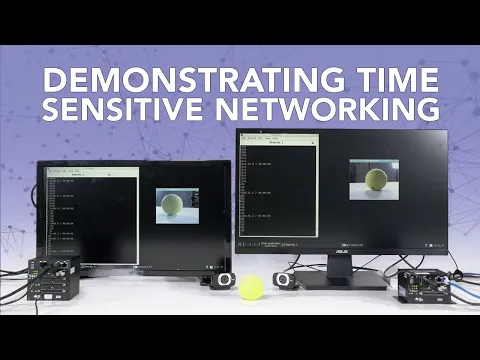
The accompanying demonstration video and infographic illustrate how the combination of User Datagram Protocol (UDP) and DDS with TSN determinism can deliver prioritized data without delays.
in the first system, a UEI SoloX ARM publisher chassis is connected to a UEI SoloX ARM subscriber chassis via Ethernet. Here, the publisher transmits a video stream from a webcam to the subscriber over RTI Connext without TSN enabled, resulting in an additional UDP packet stream (with no packet priority set, leading to video stream lag).
the second system mirrors the first setup, with a UEI SoloX ARM publisher chassis linked to a UEI SoloX ARM subscriber chassis via Ethernet. In this case, the publisher sends a video stream from a webcam to the subscriber over RTI Connext, but with TSN enabled, alongside an additional UDP packet stream (demonstrating TSN determinism).
UDP-ONLY SYSTEM #1 RESULTS:
In this scenario, UDP operates with multiple streaming processes and active interference bottlenecks, lacking TSN priority. Consequently, image delivery is significantly delayed, leading to potential pixelation issues. UDP alone continuously transmits all data from the publisher without prioritizing critical facts.Relying solely on UDP for mission-critical data can be both costly and hazardous.
TSN-ENABLED SYSTEM #2 RESULTS:
In this setup, the video stream is assigned the highest priority. When an object moves in front of the camera,the monitor displays the movement in real-time without any latency. TSN determinism guarantees that even with multiple processes running concurrently, prioritized data is delivered seamlessly, preventing non-real-time traffic from disrupting critical real-time data.
The importance of TSN determinism is paramount, as the timely delivery of critical messages over high-speed and complex data systems is essential for modern avionics applications. UEI’s ARM processing capabilities, rugged design, chassis versatility, and extensive I/O options support a wide range of TSN applications. Coupled with RTI Connext’s QoS, scalability, and reliability software tools, high-traffic mission-critical systems are assured uninterrupted operation and deterministic delivery of essential DDS communications.