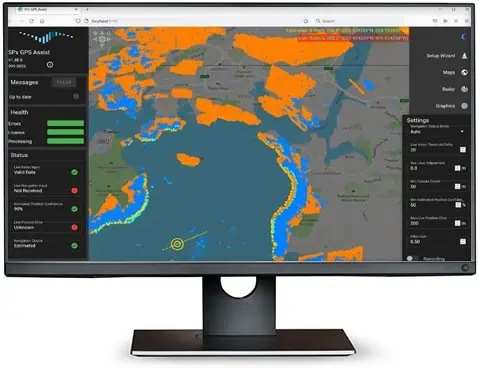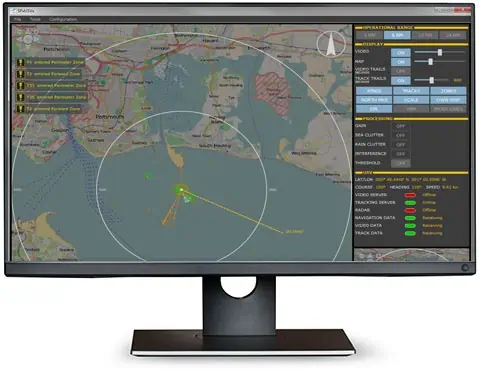
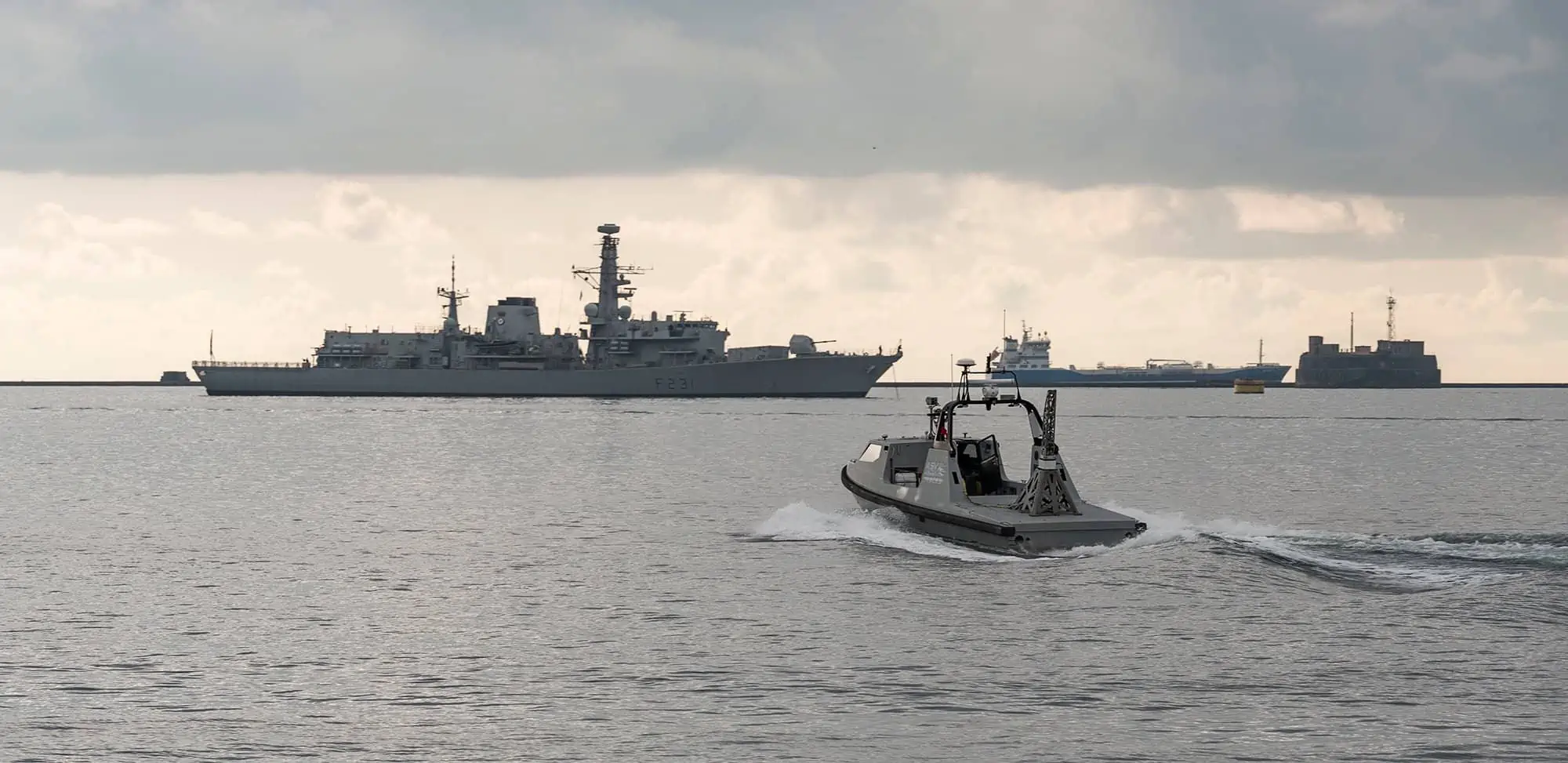
Cambridge Pixel stands at the forefront of radar software development, specializing in sensor processing and display solutions tailored for unmanned surface vessels (usvs).
Our advanced technologies are deployed globally, enhancing both military and commercial unmanned maritime platforms. Our solutions seamlessly integrate with a diverse array of maritime radars and additional sensors, including cameras, AIS, GPS/GNSS, and motion reference units (MRUs).
Navigate to Section:
- SPx tracking Server – radar processing software
- SPx Fusion Server – sensor data fusion software
- HPx 346 – radar data converter hardware
- HPx 450 – dual-stream radar acquisition card
- Maritime Display Framework – data visualization software
- USV Toolkit
SPx Tracking Server – Radar Processing Software
Target Tracking and radar Data Extraction
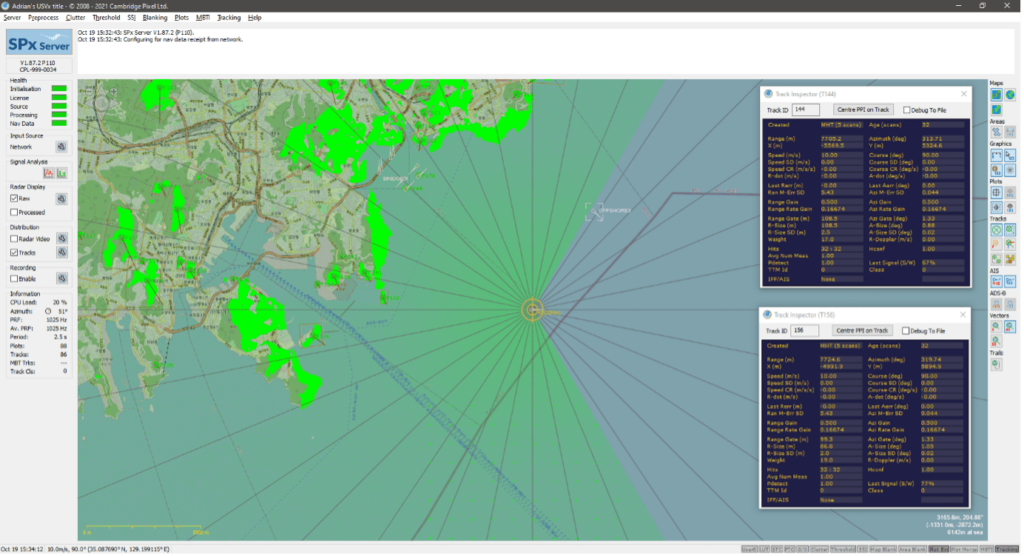
The SPx Server serves as a commercial off-the-shelf (COTS) radar data extractor and target tracker for USVs, capable of direct integration with vessel hardware or processing radar video transmitted over a network.this system analyzes polar format primary or IFF radar video to detect targets, correlating data across scans to deliver positional and motion updates.
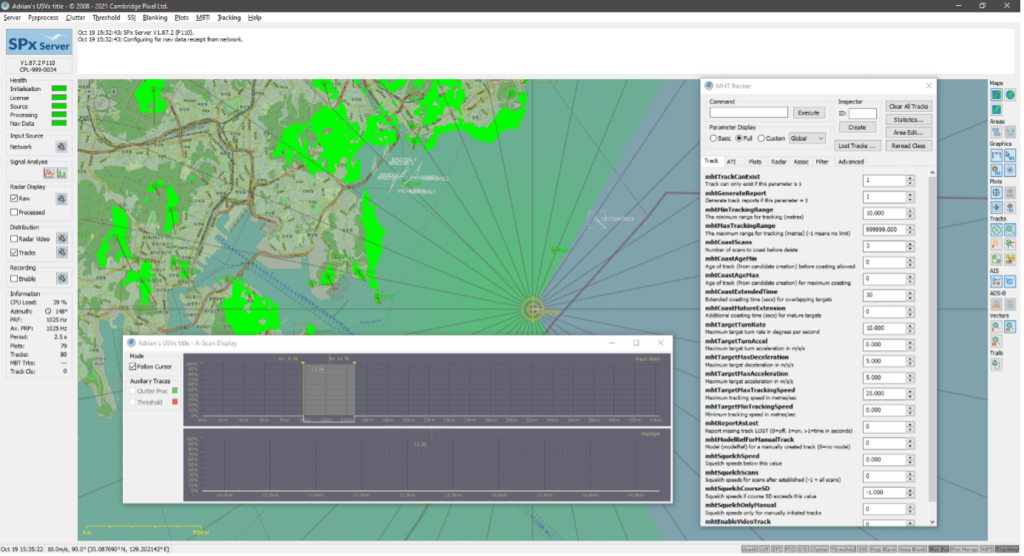
The software encompasses the SPx Processing library, which offers a wide array of radar processing functionalities, including:
- Gain control
- area-based video removal (masking)
- CFAR thresholding
- Interference suppression
- And numerous additional features
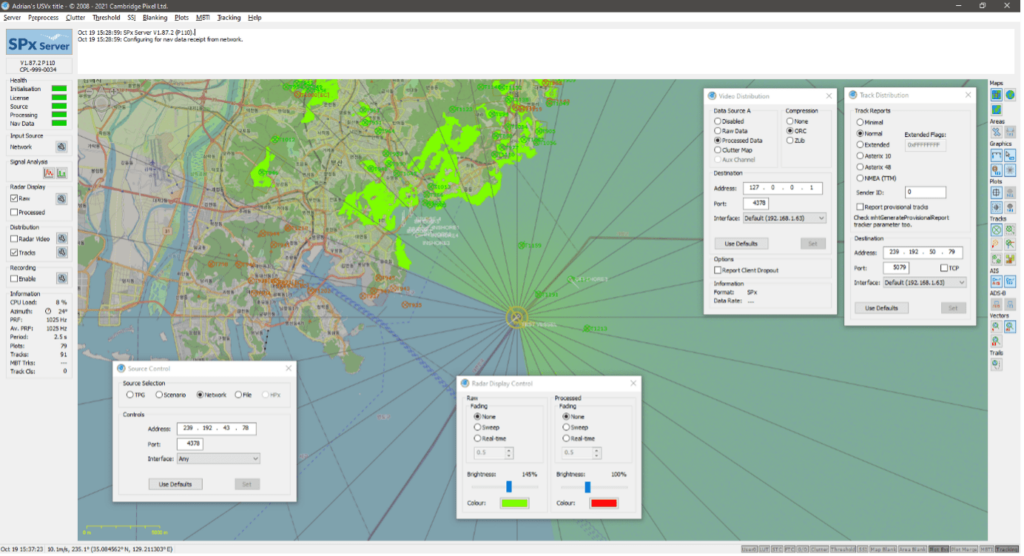
Custom user-defined processes can be integrated into the processing workflow,enabling tailored solutions that utilize SPx as the foundational framework.
Various parameters can be adjusted to optimize tracker performance, including:
- Minimum/maximum target speed
- Fixed or adaptive gain
- Expected target dynamics
- Measurement noise estimates
- Target size limitations
Request a demo: SPx Server – Radar Processing Software
SPx Fusion Server – Sensor Data Fusion Software
Integrate Multiple Sensors into a Unified Data Stream
SPx Fusion Server software consolidates data from various independent sensors into a single stream of correlated reports,which can be transmitted over a network without requiring additional development.
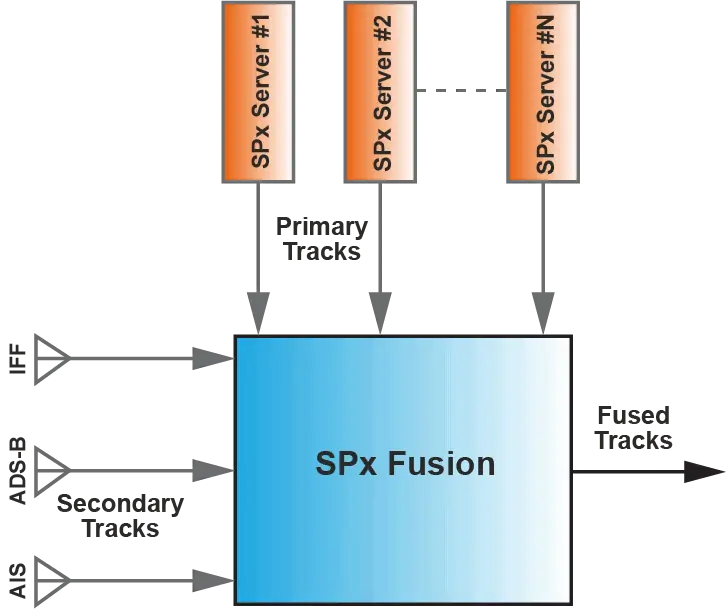
This software can process data from primary radar videos (utilizing SPx Server) as well as secondary sources like AIS.
SPx fusion allows users to assign priority levels and scores to each sensor, thereby giving more significance to those known for higher accuracy.
Radar Data Integration
The radar software correlates input reports and produces a single set of output reports, eliminating duplicates. It can manage sensors with overlapping coverage areas, such as S-band and X-band radars, facilitating handover support as targets transition from one sensor to another.
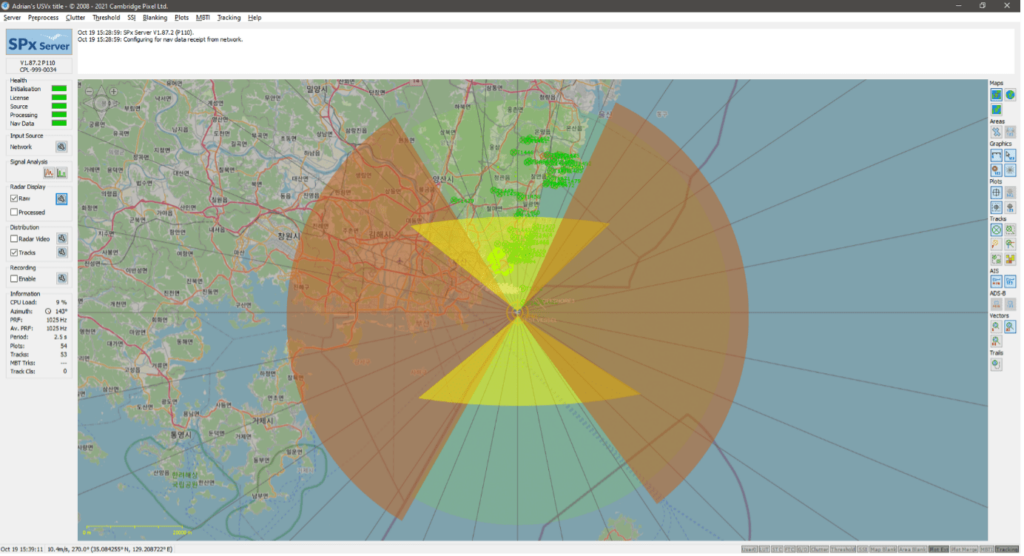
SPx Fusion of Overlapping / Co-located Sensors
More facts: SPx Fusion Server – sensor Data Fusion software
HPx 346 – Radar Data Converter Hardware
Connect to Maritime or Specialized Radars
the HPx-346 is a compact interface and distribution unit that digitizes analog radar data and transmits it as UDP packets over Ethernet. It is available as a standalone unit or as an OEM card for system integrators, featuring a low-power ARM/FPGA-based System on Chip (SoC) that boots in under ten seconds and consumes less than 5W of peak power. To date, we have successfully interfaced with over 80 radar models. Explore all supported radars here
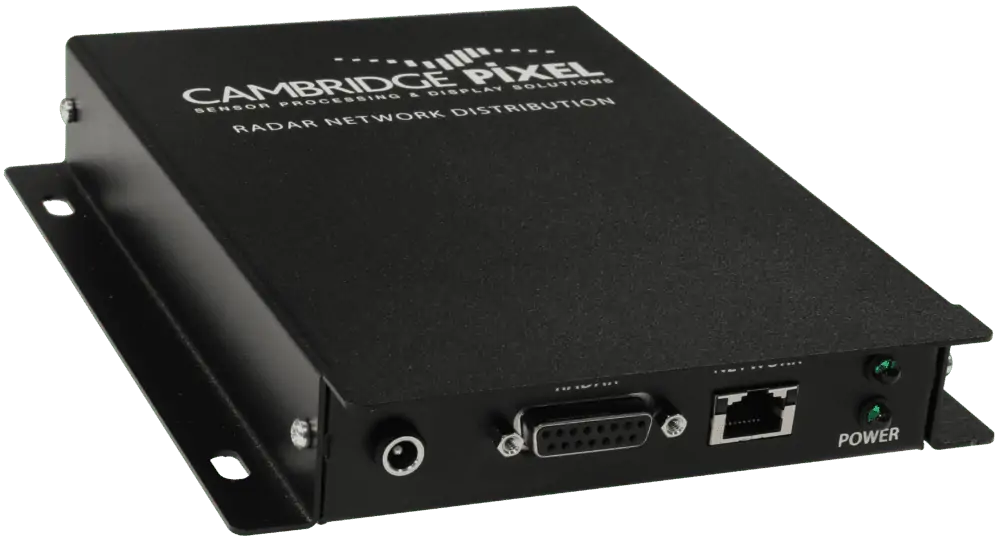
HPx-346 boxed unit (single network)
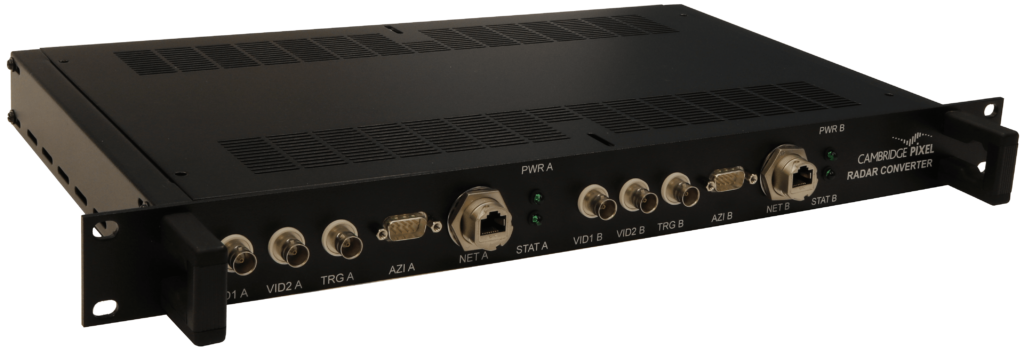
HPx-346 rack-mount unit
Operational mechanism
This unit accepts radar video, trigger, and azimuth (ACP/ARP) signals as inputs and can be configured to accommodate a wide variety of signal types, including differential and single-ended signals up to 60V, enabling compatibility with numerous radar models.
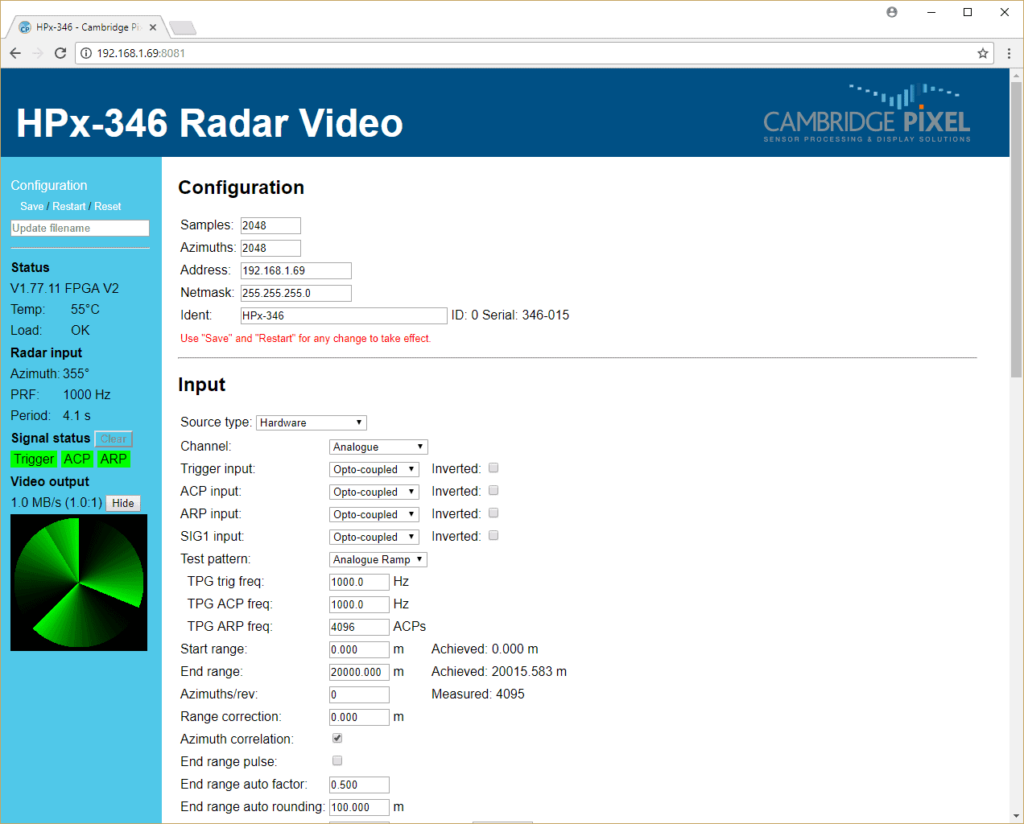
The HPx-346 can be configured, controlled, and monitored through a user-kind web interface, accessible via any standard web browser without the need for additional programming.
More information: HPx-346 – Radar Data Converter Hardware
HPx 450 – Radar Interface Card
Connect Up to Two Analog or Digital Radars
The HPx-450 is a flexible radar interface card that can function in either single or dual-stream mode, connecting to a variety of analog and digital radars for high-resolution data acquisition.built in an XMC Switched Mezzanine format, it is compatible with VME, VPX, and compact PCI processor cards, featuring a four-lane PCI Express interface capable of data transfers exceeding 500 MB/sec.
This card supports a broad spectrum of radar signal types, including single-ended, differential, open-collector, and opto-isolated signals. Radar video, trigger, and azimuth signals are accepted in ACP/ARP or parallel data formats, with software alarms available for trigger or azimuth data loss.
The adaptable solution allows for dual-stream functionality in several configurations:
- Dual sampling of a single radar video at varying rates – as an example, higher sampling at short ranges for detailed close-in analysis, alongside lower sampling across the full radar range for comprehensive coverage.
- Dual redundant mode – offers software-controlled automatic failover from one input channel to another in the event of trigger, ACP, or ARP signal loss.
- Dual independent mode – enables simultaneous and independent data capture from two distinct radars.
The HPx-450 is ideally suited for rugged embedded systems and is available in both commercial and extended temperature variants.
More information: HPx-450 – Dual-Stream Radar Acquisition card
Maritime Display Framework – Visualization Software
Create Custom User Interfaces for Transponder & Radar Data
The Maritime Display Framework is a software development toolkit that empowers users to design custom Windows .NET-based user interfaces for displaying primary maritime radar data and secondary transponder information.
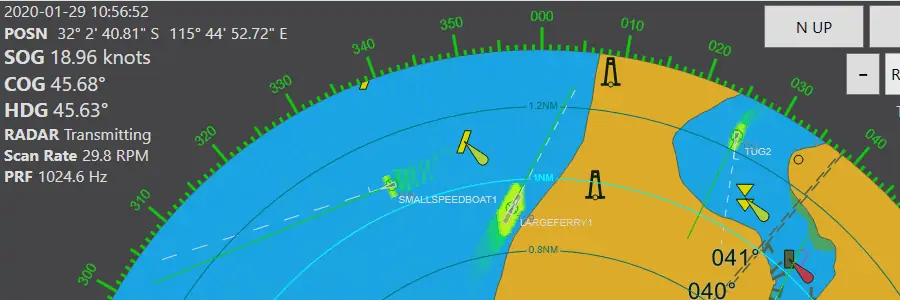
Visualizing Radar Data
The user interface can be tailored to showcase scan-converted primary radar video, video track data, electronic charts, secondary transponder information, and camera feeds. It supports multiple camera windows with various input formats, including H.264 via RTSP stream.
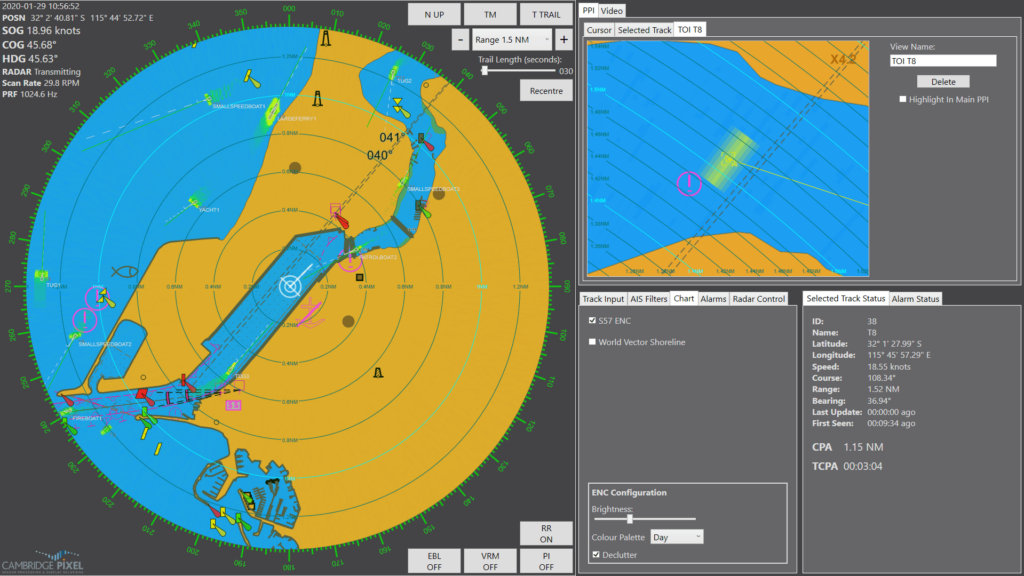
This software development package includes various tools for processing essential information for maritime displays,such as generating predictive vectors,calculating a tracked object’s closest point of approach (CPA),and estimating time to CPA (TCPA),thereby providing collision warnings with other vessels. A comprehensive range of alarms can be integrated into displays, including target track alarm types and target dependencies (such as hazardous cargo status provided in AIS).
More information: Maritime Display Framework – Radar visualization Software
USV Toolkit
Data Recording, Camera Control, Tracking, Video Distribution, and Simulation
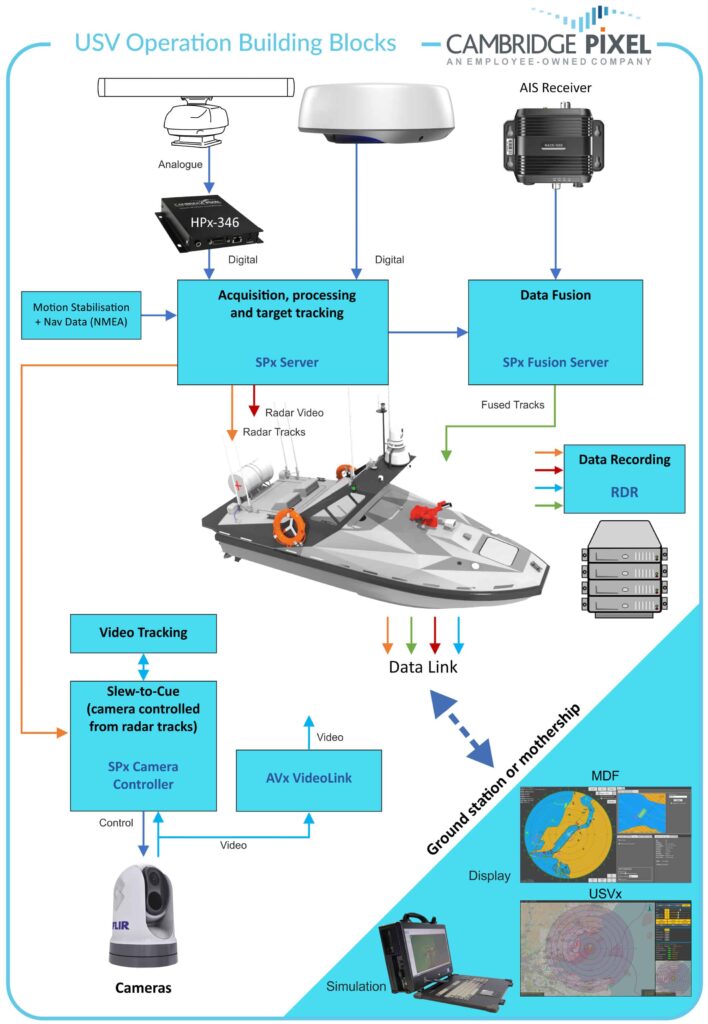
Designed to complement the SPx Server, our technology components can be utilized for USV navigation and development. Clients can select from a variety of technologies to meet their specific requirements, including a comprehensive development library,interfacing solutions for various maritime and specialized radars for target tracking and radar control,track correlation from multiple sources, camera control that can automatically follow a selected radar track, mission data recording and replay, remote monitoring applications, inspection tools including AIS, radar simulation and training,as well as protection against GPS signal loss.
Cambridge Pixel’s USV Toolkit Technology Ecosystem
More information: USV Toolkit