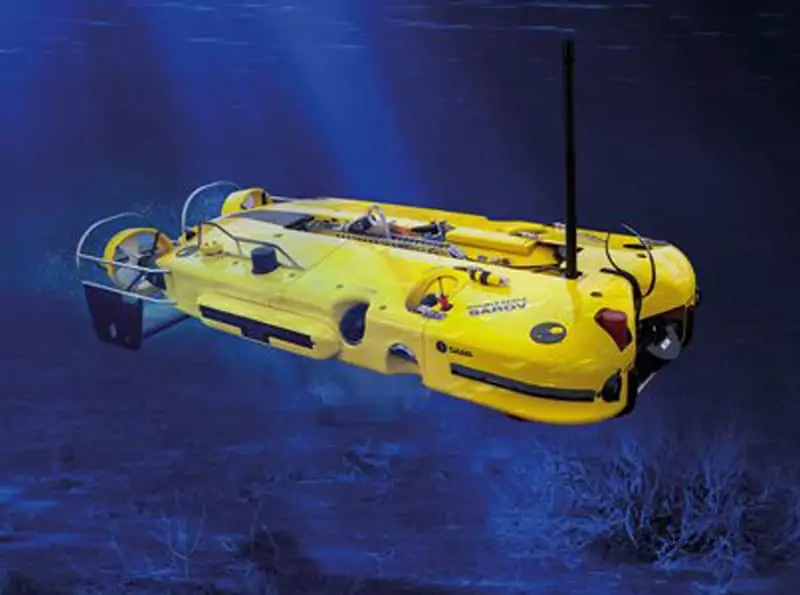


Kawasaki Heavy Industries (KHI) has opted for a thorough array of subsea navigation, positioning, and dialog technologies from Sonardyne to effectively manage and control its inaugural commercial Subsea Precise Inspector with Close Eyes (SPICE) Autonomous Underwater Vehicles (AUVs).
The SPICE AUV is equipped with an innovative submerged docking system and a specialized robotic arm designed for non-destructive testing, making it ideal for intelligent and low-logistics inspections of pipelines and subsea assets at depths reaching 3,000 meters.
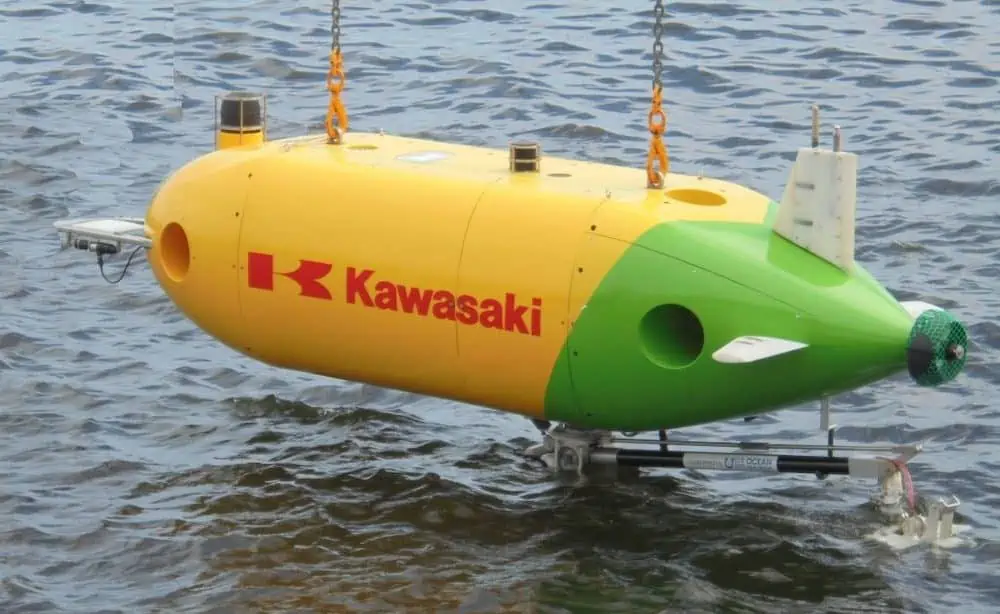
This vehicle incorporates Sonardyne’s advanced hybrid navigator, SPRINT-Nav, which ensures precise and extended navigation capabilities during missions while minimizing complexity and conserving payload space.
The SPRINT-Nav 700 model, chosen by KHI, features top-tier sensors, including Honeywell ring laser gyroscopes and accelerometers, ensuring optimal performance.
SPRINT-Nav integrates Sonardyne’s SPRINT Inertial Navigation system (INS) sensor, Syrinx 600 kHz Doppler Velocity Log (DVL), and a high-accuracy intelligent pressure sensor into a compact unit, making it one of the most compact inertial navigation solutions available today.
Additionally, the SPICE AUV will utilize Sonardyne’s AvTrak 6, which combines a transponder, modem, and emergency locator beacon into one device. KHI has also employed Sonardyne’s Mini-Ranger 2 Ultra-Short Baseline (USBL) system, along with a Robotics Pack, to facilitate tracking and communication throughout the progress and testing phases.
Advanced Subsea Navigation and Communication Solutions
SPRINT-Nav merges Sonardyne’s SPRINT INS sensor, Syrinx 600 kHz DVL, and a high-accuracy intelligent pressure sensor into a single compact unit, making it one of the smallest inertial navigation instruments on the market. The seamless integration of raw sensor data at a foundational level delivers exceptional navigational accuracy and performance for subsea vehicles.
Designed for straightforward integration with AUV platforms, AvTrak 6 consolidates the roles of transponder, transceiver, and telemetry link into a single low-power device, freeing up additional payload space for other instruments. This allows AUVs to perform simultaneous LBL ranging, USBL tracking via surface vessels, and robust telemetry for communications between AUVs and vessels.
Mini-Ranger 2 is particularly suited for smaller vessels requiring survey-grade positioning accuracy. It can track up to 10 targets simultaneously at rapid update rates, is swift to set up, and has a standard operational range of 995 meters, which can be extended to 4,000 meters. Sonardyne’s Marine Robotics software package enhances capabilities when paired with compatible subsea instruments like AvTrak 6, enabling secure data exchange and remote control of multiple AUVs in swarm operations.
noriyuki Okaya, from the development & Design section of the AUV Department at KHI, stated, “Our objective with the SPICE AUV is to enhance the efficiency of inspection operations, reduce costs, and alleviate the risks faced by crews on offshore support vessels.”
“We are confident that Sonardyne’s technologies will facilitate the precise navigation of the SPICE AUV, aligning with our operational goals,” he added.
Two SPICE AUVs have already been commissioned by a UK-based subsea services firm for cable and pipeline inspections, and also traditional survey tasks. The first unit is expected to be delivered later this year.