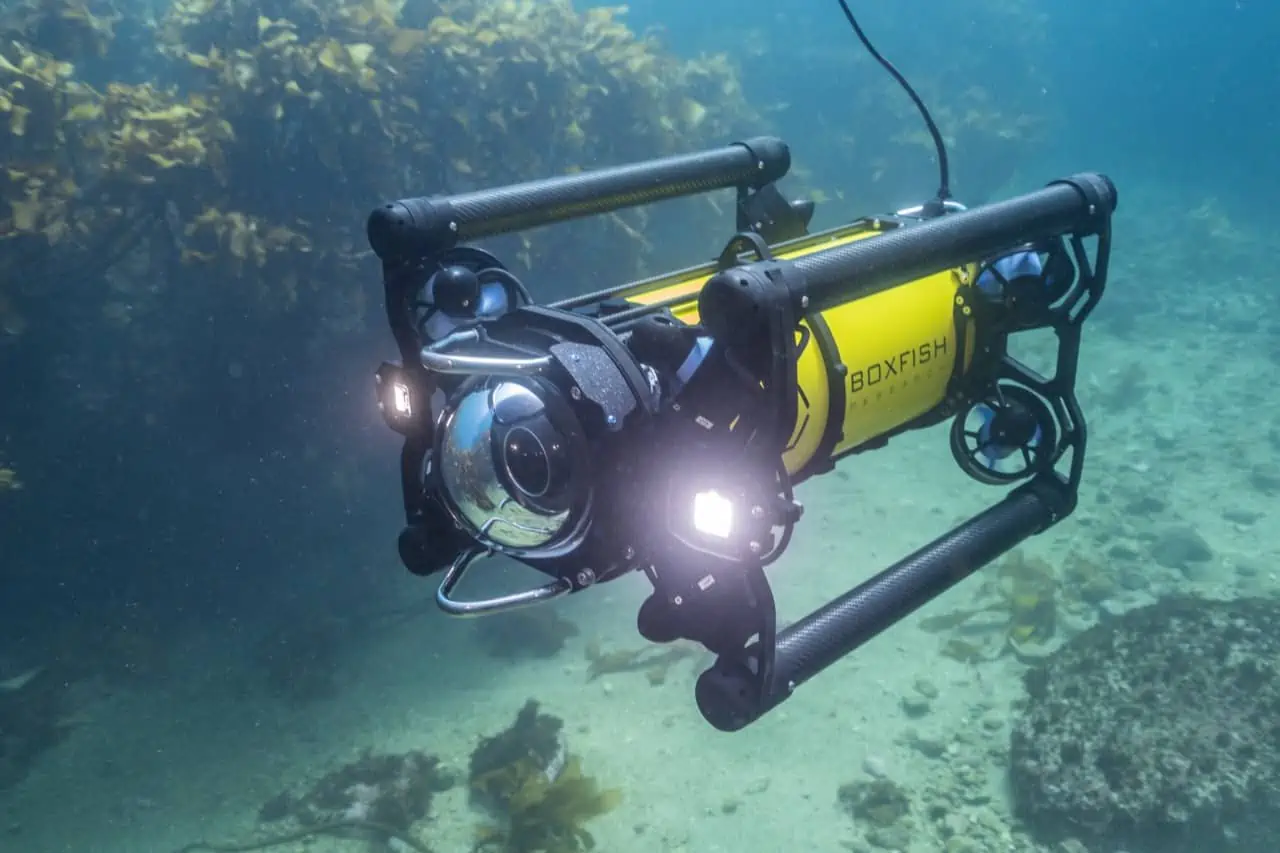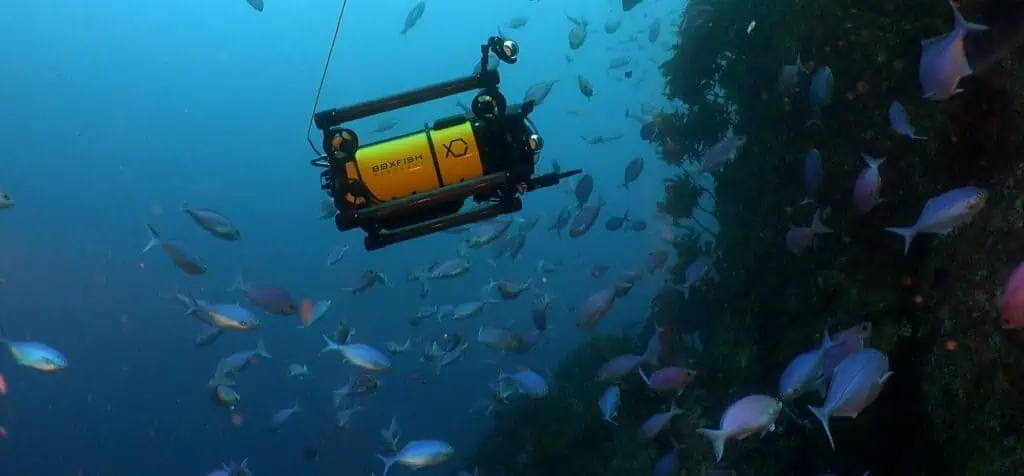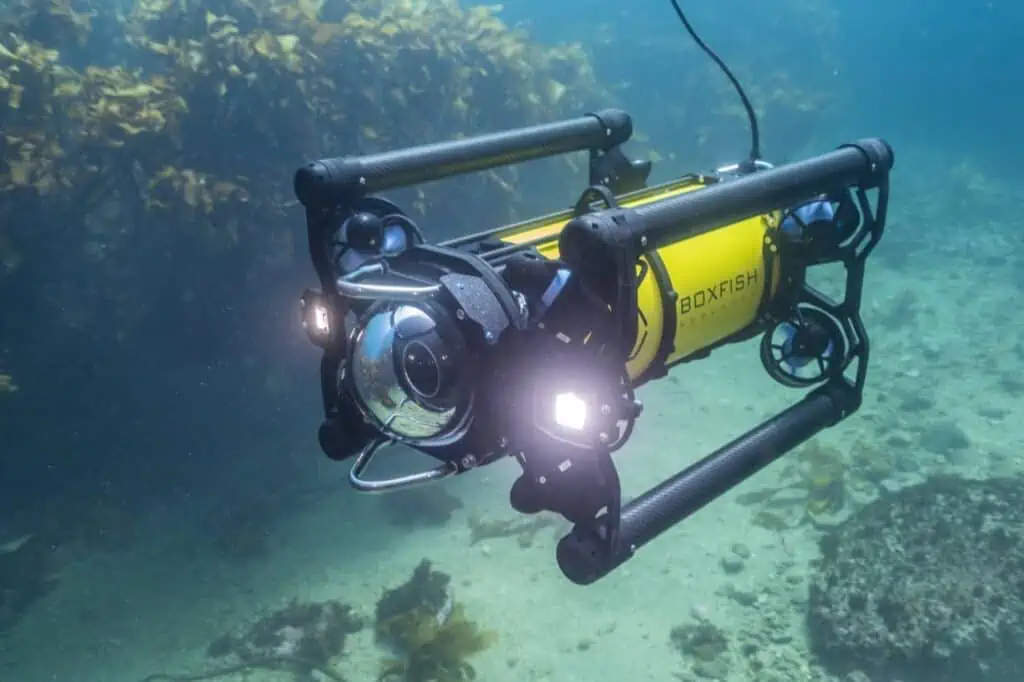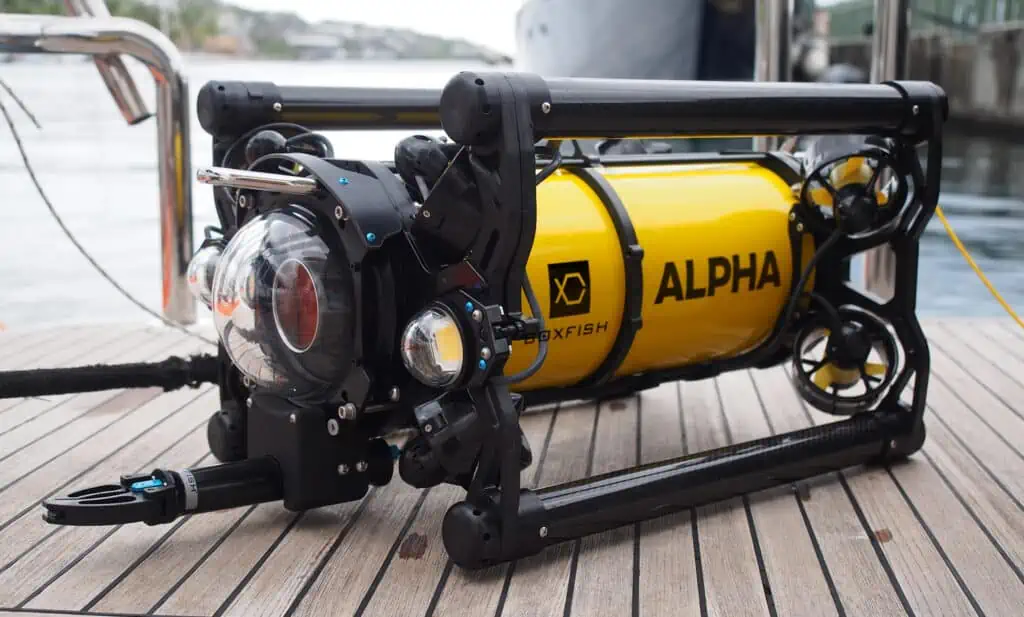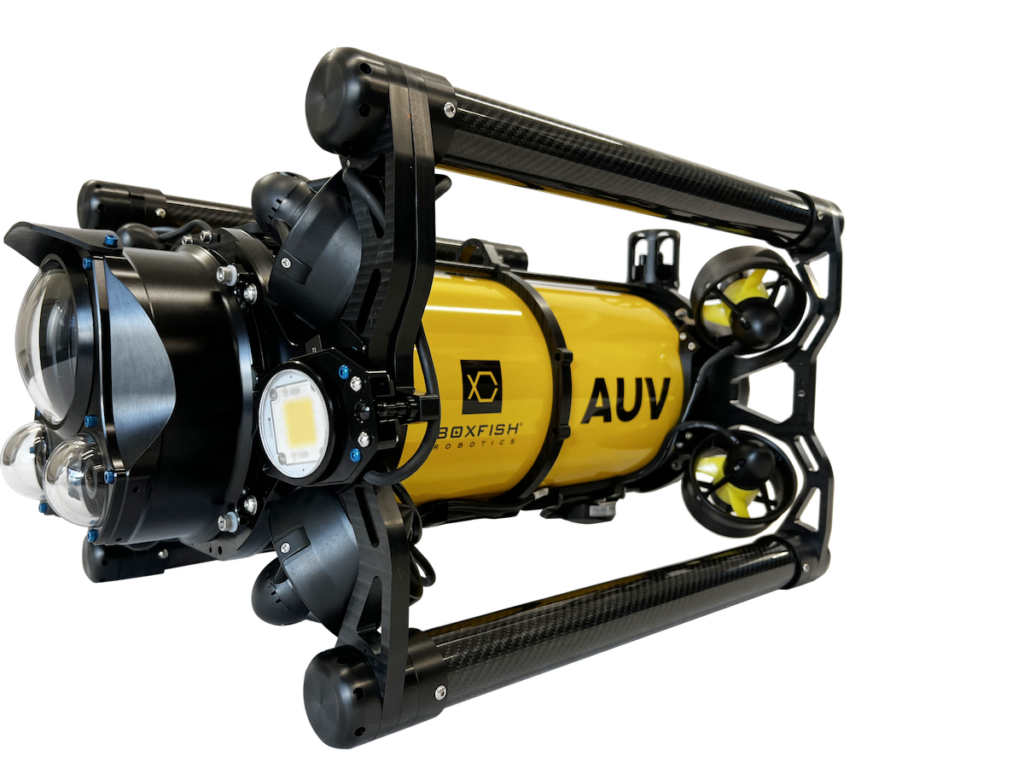


Boxfish has published a case study highlighting the deployment of it’s Remotely Operated Vehicle (ROV) in the search and recovery of a scientific monitoring buoy from the New Zealand National Institute of Water and Atmospheric Research (NIWA) that went missing off Wellington’s coast.
Boxfish ROV equipped with Blueprint Subsea USBL and Multibeam Sonar during the recovery operation
The buoy, designed to transmit real-time data regarding oceanic and meteorological conditions, ceased dialogue and was presumed lost after being struck by a large vessel.
Employing underwater search technologies such as an echosounder and drop camera, the NIWA team identified an anomaly on the ocean floor near the buoy’s original mooring at a depth of 45 meters.However, advanced underwater search and recovery equipment was necessary to confirm the buoy’s identity and facilitate its retrieval.
Given the depth of the buoy, diving was not a viable option. approximately a month after the buoy’s disappearance, the Boxfish team was enlisted to assist in the recovery efforts.
The strategy involved utilizing the Boxfish ROV, outfitted with a standard 4K camera along with USBL and sonar accessories, to locate the buoy, evaluate its condition, and determine an appropriate point for attaching a recovery cable. The ROV would then secure the cable for the buoy’s retrieval by the recovery vessel.
Underwater Exploration
Sonar image captured during the recovery mission, showcasing the scientific buoy
For those unfamiliar with marine conditions, it might seem straightforward to navigate to the buoy’s GPS coordinates and deploy the ROV directly.
However, reality often presents challenges! On the day of the operation, a strong current of 1 knot complicated matters. After anchoring the vessel and accounting for drift, the search boat was positioned some distance from the buoy’s estimated location.
To enhance the underwater search efficiency, the Boxfish team equipped the ROV with two additional devices: a blueprint Subsea USBL beacon and a blueprint Subsea Sonar unit.
USBL
serves as a local positioning system, indicating the ROV’s location in relation to the boat. In this instance, a local beacon was mounted on a pole beneath the anchored NIWA vessel, while the remote beacon was attached to the ROV.
Boxfish Console enables real-time monitoring of the underwater mission on a 17-inch 4K display
Using the GPS coordinates of the buoy’s suspected position, the team deployed the ROV in the correct direction. The USBL application on the Boxfish surface Control Station provided a visual representation of the ROV’s movement towards the buoy, relative to the ship’s fixed position.
Despite favorable visibility of around 8 meters, relying solely on the USBL and ROV camera was not the most effective method for locating the buoy. Therefore, the team utilized a sonar accessory to conduct a thorough scan of the seabed.
The scientific buoy successfully retrieved and brought aboard the ship using the Boxfish ROV
the Blueprint subsea Sonar is a multibeam sonar capable of operating at various frequencies, depending on the desired resolution and field of view. Higher frequencies yield sharper images but have a narrower field of view. In this case, the team opted for a lower frequency, producing a 40-meter wide beam that allowed for a more extensive search area.
The sonar visualization software revealed a line on the ocean floor, leading the ROV towards it. Soon after,the buoy came into view of the ROV’s camera.
Sonar image depicting the buoy’s chain.
The live camera feed from the ROV, viewable at the surface via the Control Station, provided detailed footage of the buoy resting on the seabed.The NIWA team was thrilled to discover that the buoy was intact and in good condition, and they identified a suitable location for attaching the recovery cable.
Underwater Retrieval
With the buoy’s location confirmed,the ROV easily relocated it using USBL,this time with a recovery cable in tow.
The Boxfish team had developed a mechanism on the ROV designed to effectively “thread the needle.” Despite the 1-knot current, the ROV’s active stabilization feature enabled precise movements to guide a weighted cable through the designated hole. The team then maneuvered the ROV to the opposite side to secure the cable and bring it to the surface.
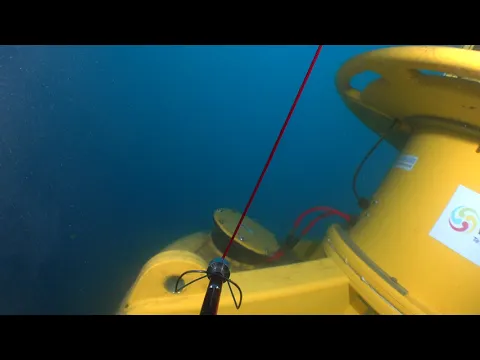
The video showcases the underwater footage captured by the Boxfish ROV during the “thread the needle” operation under the 1-knot current.
Once the recovery cable was successfully attached, the NIWA team was able to retrieve the buoy and bring it aboard the ship.
Boxfish ROV and Accessories – vital Tools for Underwater Search and Recovery
The Boxfish ROV offers a safe, efficient, and cost-effective solution for the prompt recovery of valuable underwater assets, such as the scientific buoy deployed by the GWRC-DOC-NIWA collaboration.
When an object is lost underwater, the unpredictable nature of the environment necessitates a swift response for search and recovery operations.
Utilizing commercial divers for underwater recovery is not always feasible due to safety concerns, depth limitations, and the need for decompression time.
Boxfish ROVs can be deployed in as little as ten minutes by a two-person team and can reach depths of up to 1000 meters. The integrated sonar and USBL accessories enable the ROV to conduct underwater searches efficiently and perform multiple dives with high accuracy.
Once the target is located, the Boxfish ROV’s remote-controlled camera streams live 4K video to the surface, displayed on a 17-inch UHD monitor, providing thorough coverage of the underwater environment.
The Boxfish ROV’s extraordinary stability and control in currents make it an ideal tool for underwater recovery missions. Additional grabber accessories are available to support a variety of recovery tasks.