

In this piece, Dr.Rob Crook, Research Director at Wavefront Systems, elaborates on the advantages of Multi Aperture Sonar (MAS) compared to Synthetic Aperture sonar (SAS), and outlines scenarios for their optimal use.
Understanding the Advantages of Multi Aperture Sonar over Synthetic Aperture Sonar
Solstice
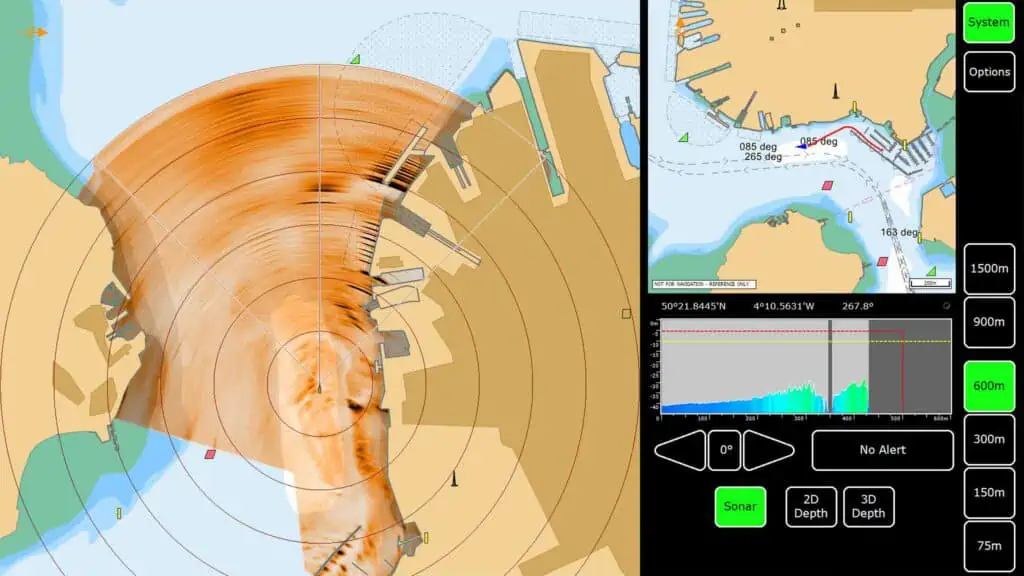
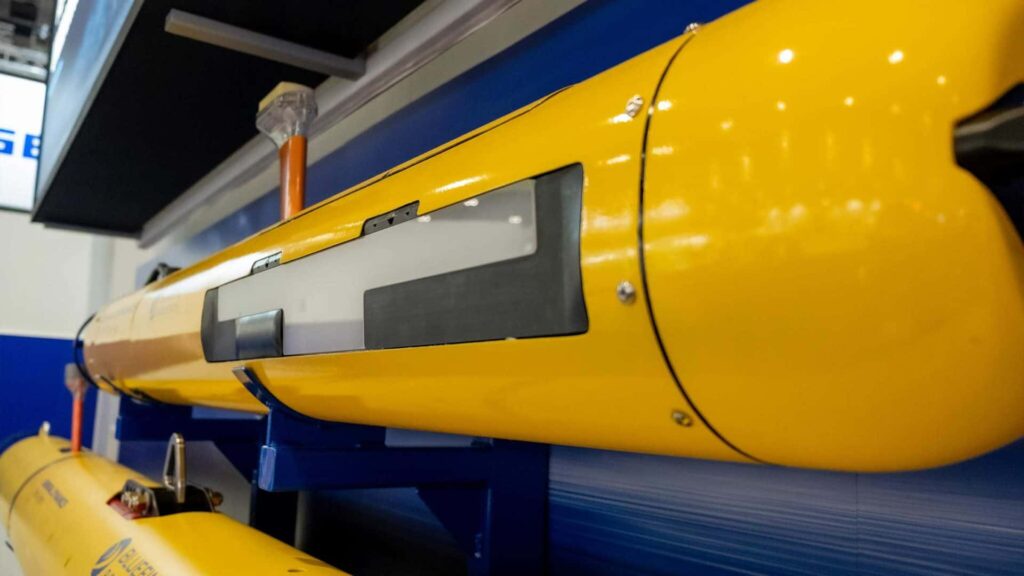
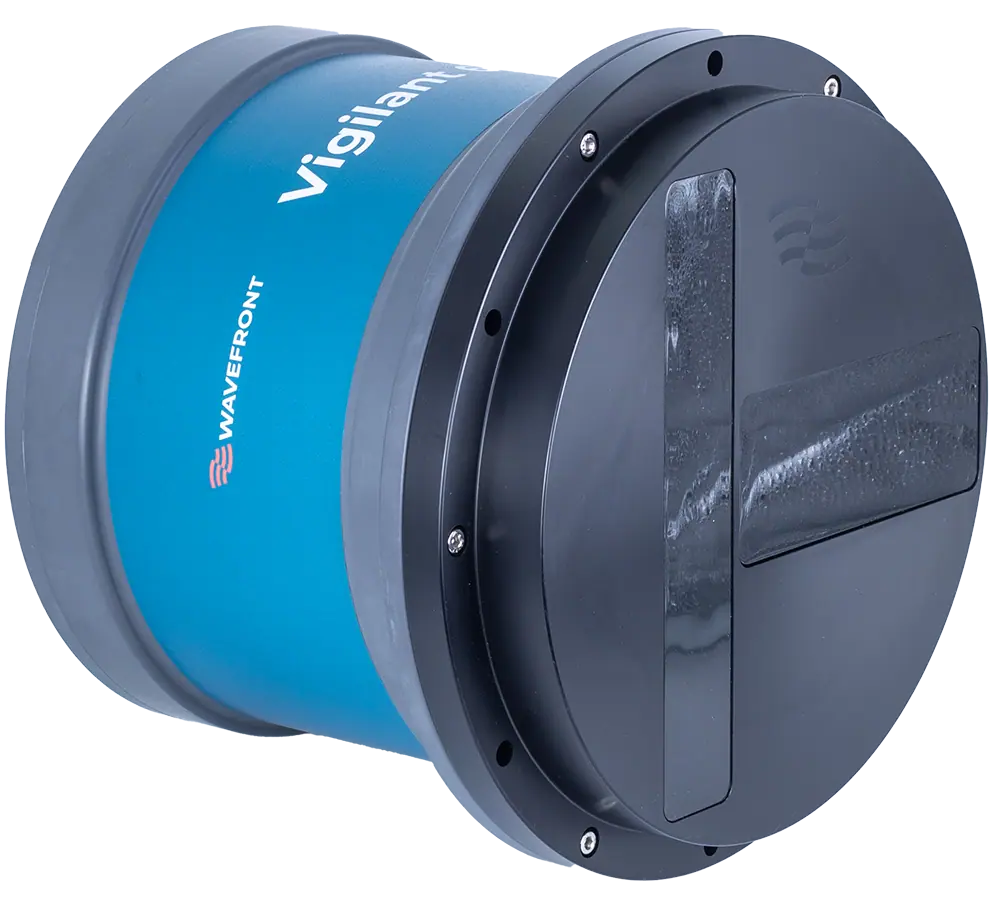
represents Wavefront’s innovative Multi Aperture Sonar (MAS) solution. While it operates similarly to high-performance conventional side-scan sonar, it’s processing methodology is distinct. Solstice leverages multibeam data from 32 elements to dynamically enhance focus across the entire swath. this multi-aperture approach not only refines the data but also significantly boosts the signal-to-noise ratio.Moreover, Solstice’s array is engineered to mitigate multi-path effects, enhancing the critical shadows and highlights necessary for effective object detection and classification. It generates narrow 0.15° along-track beams and boasts an extraordinary 200m swath. Designed for mounting on Autonomous Underwater Vehicles (AUVs), Solstice operates with minimal power consumption.
Utilizing an AUV equipped with Solstice allows for greater visibility and higher resolution compared to traditional side-scan systems. However, when we juxtapose MAS with Synthetic Aperture Sonar (SAS), it becomes evident that MAS has a shorter operational range and slightly lower resolution.
Why Transition from SAS to MAS?
In the development of autonomous underwater vehicles, certain trade-offs are unavoidable. The constraints of Space,Weight,and power (SWaP) budgets are significant. For vessels primarily focused on surveying, where power usage is less of a concern, SAS is a logical choice. It can operate continuously, consuming hundreds of watts without severely impacting the overall power budget.
conversely,for low-logistics systems,the situation is quite different. Popular two-person portable systems face stringent SWaP limitations.Even SAS systems typically require two to three times the power of Solstice.
Moreover, SAS systems tend to be bulky and heavy, making them impractical for compact setups. Fitting such systems onto a 9-inch diameter platform is nearly impossible. The size of SAS units means that even on larger AUVs, operators must be ready to sacrifice mission endurance. Installing an SAS unit reduces the available ‘SWaP’ for other essential instruments!
This is where Solstice’s MAS technology shines. Consuming a mere 21 watts (including data acquisition), it matches the leading AUV side-scan sonars in terms of power efficiency. Yet, it delivers a range and precision that is unparalleled among side-scan sonars. In terms of accuracy, over the first 50-meter swath, Solstice performs comparably to the top SAS systems. At a 75-meter range, its accuracy exceeds that of the nearest side-scan sonar by more than double. Additionally, unlike competitors, Solstice can gather data over a 200m swath with a 100m range on either side. With features like motion compensation and interferometry, Solstice is compact and lightweight, making it perfect for two-person portable applications.
MAS is ideally suited for quick, low-logistics, long-endurance, high-resolution missions on AUVs, notably those operated by smaller crews. In essence, this technology is perfect for 95% of AUVs operating in coastal regions!