
ultrasonic testing (UT) is a prevalent non-destructive evaluation method utilized for materials such as concrete, steel, ceramics, and glass, enabling the detection of flaws without damaging the item or risking operator safety.
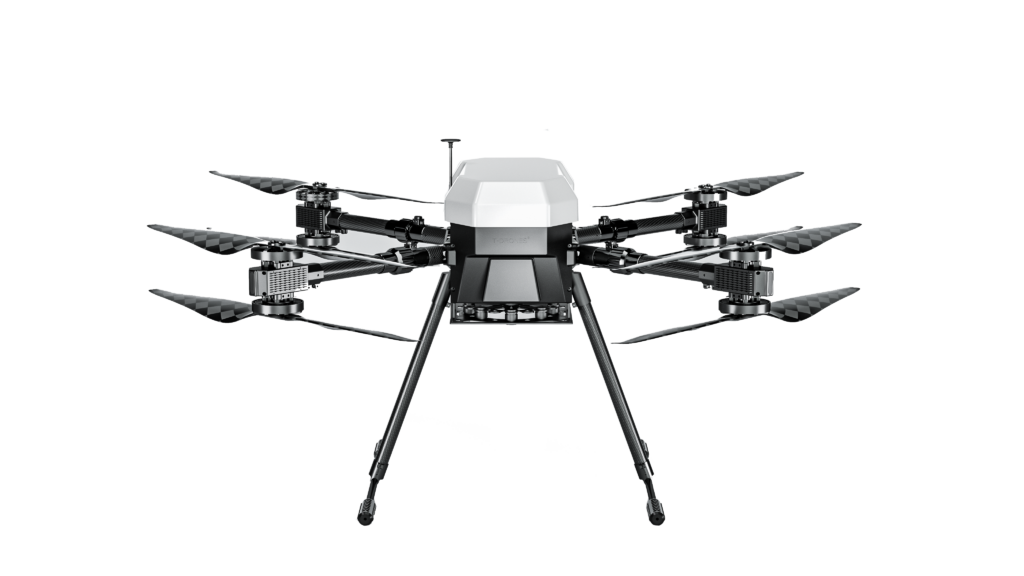
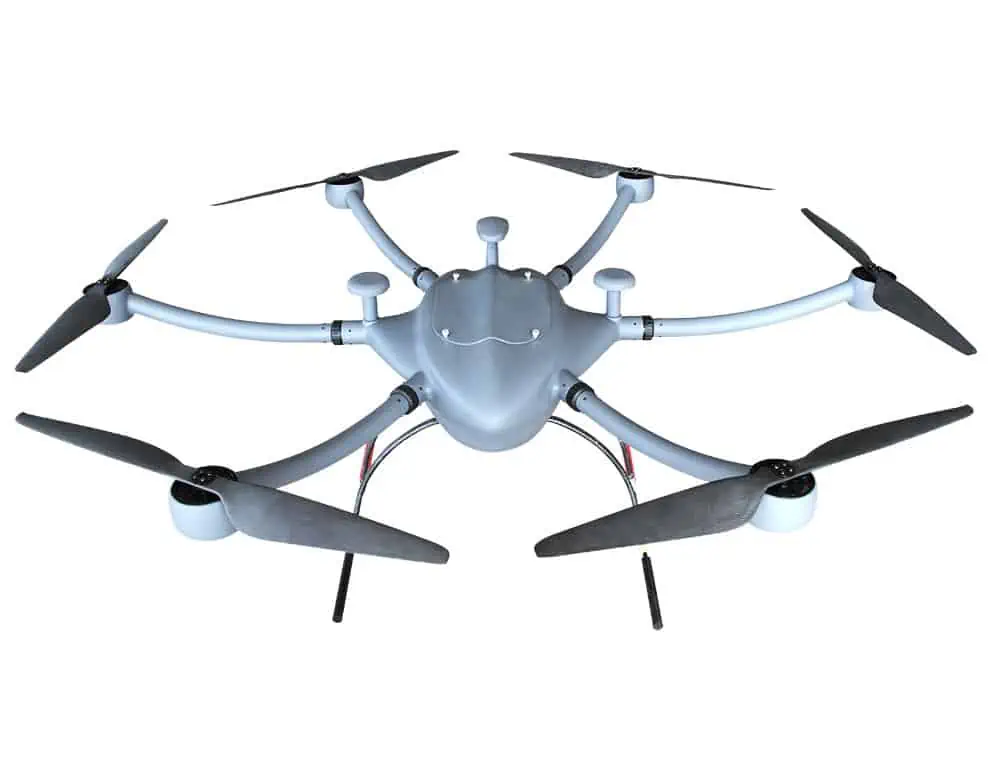
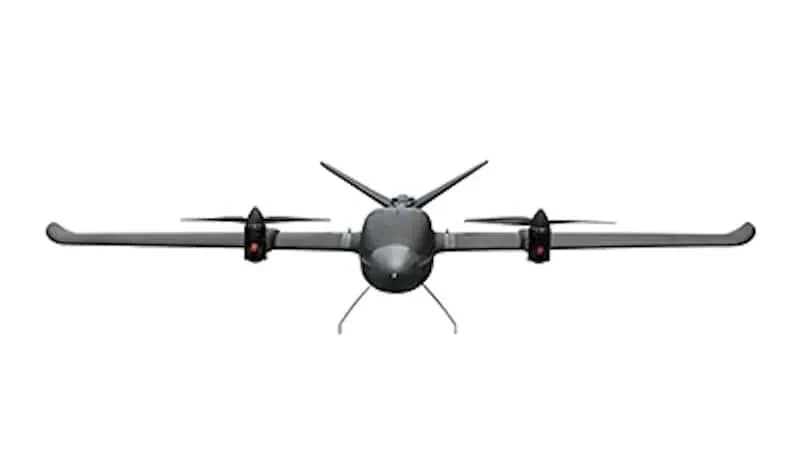
Voliro offers cutting-edge inspection solutions, including the Voliro T drone, which considerably decreases both inspection duration and expenses. By removing the reliance on conventional access techniques, these drones reduce asset downtime and enhance safety measures.
Fitted with a high-temperature UT probe, these drones can effectively examine previously unreachable assets, such as flare stacks, chimneys, boilers, scrubbers, and heat exchange piping.
Video Player
00:00
00:00
00:23
Use Up/Down Arrow keys to increase or decrease volume.
Understanding Ultrasonic Testing
Ultrasonic testing is a non-invasive evaluation technique that utilizes high-frequency sound waves to analyze material characteristics and perform dimensional assessments.
By examining the path and timing of ultrasonic waves as they traverse a test material, it is possible to identify surface defects and internal anomalies such as cracks, voids, or fiber separation. This method is capable of detecting flaws as small as half the wavelength of the sound wave,making it particularly effective for early identification of issues like cracks,voids,inclusions,and corrosion.
One of the significant benefits of ultrasonic testing is its versatility. It can be applied to a variety of materials, including metals, polymers, plastics, ceramics, fiberglass, and glass, although it is less effective on materials like foam, rubber, and certain acoustically transparent composites.
Mechanics of Ultrasonic Testing
An ultrasonic testing system typically consists of three primary components: a pulser/receiver,a transducer,and a display unit. The pulser generates high-voltage electrical signals that activate the transducer, which emits short sound waves within the range of 0.1 to 15 MHz—frequencies that are inaudible to humans and most animals.
These sound waves travel from a probe, reflect off the test material or any defects, and return as signals. The transducer then converts these signals into electrical impulses, which are visualized as graphs.
Common graph interpretations include:
- No defects found: Two consistent waves appear, indicating the initial pulse and the reflection from the back wall.
- Defect identified: An additional wave appears between the initial pulse and the back wall signal, indicating a reflection from a defect.
By analyzing the time taken for waves to travel and their speed, inspectors can accurately determine the location, size, orientation, and shape of any defects.
Technological advancements are propelling automation in ultrasonic testing.As an example, drones equipped with UT probes can access challenging areas, while artificial intelligence enhances data interpretation, leading to more reliable outcomes.
Applications of Ultrasonic Non-Destructive Testing
As a non-destructive technique, ultrasonic testing is particularly suited for evaluating large industrial assets such as flare stacks, wind turbines, storage tanks, pipes, and welds. These inspections can frequently enough be completed within hours, causing minimal disruption.
Routine ultrasonic testing is crucial for various safety certifications and standards, including:
- ISO 11666:2010 and 2011: Guidelines for weld testing.
- API RP 2I: In-service inspection protocols for mooring hardware.
- API 5L: Standards governing line piping.
Moreover, ultrasonic testing is extensively utilized for asset condition evaluations across multiple sectors.
Diverse Applications of Ultrasonic Non-Destructive Testing
- Industries: Aerospace, automotive, electronics and battery, metals and casting, oil and gas, power generation, construction, and chemical.
- Types of Defects: cracks, corrosion, voids, porosity, debonds, inclusions, fractures, holes, lack of fusion, and honeycombing.
- Assets: Flare stacks, wind turbines, large storage tanks, pipes, welds, joints, heavy machinery, and shafts.
The frequency of ultrasonic inspections is influenced by factors such as material type, environmental conditions (e.g., temperature, pressure, humidity), age, local regulations, and manufacturer recommendations.
Typical inspection intervals include:
- steel and aluminum DOT cylinders: Every 5-10 years (per U.S.Department of Transportation guidelines).
- Wind blades: Every 5 years during the warranty period, then every 6-12 months if prior damage is noted.
- Storage tanks: Every 5 years if corrosion rates are unknown (API 653).
- Pressure vessels: Every 10 years or at three-quarters of the remaining corrosion rate life (API 510).
- Pipes and tubes: Every 5-10 years, depending on the pipe class (API 570).
- Welds: Before and after the welding process,instantly after the weld cools (API 577).
More frequent inspections are advisable as assets age to prolong their lifespan and avert unexpected failures.
Overview of the Ultrasonic Inspection Process
Conducting ultrasonic inspections requires skilled technicians and certified equipment.Tests can be performed on operational assets if secure access is available. the process typically follows these steps:
- Set up scaffolding to reach the test area (if necessary).
- Clean the surface to eliminate dirt or coatings that may interfere with readings.
- Choose the appropriate probe based on the material and testing objectives.
- Send a pulse through a calibration block to ensure equipment functionality.
- Calibrate settings for the specific material.
- Apply a coupling agent (gel, water, or oil) to the test area.
- Move the transducer across the surface while monitoring graphs for any changes.
After the inspection, technicians document asset details, test outcomes, inspection dates, and any deviations from standard procedures.
Essential Ultrasonic Testing Equipment
Ultrasonic testing can be conducted manually, mechanically, or automatically. Basic equipment includes a pulser/receiver, transducer, display unit, and coupling agent. Additional tools may consist of calibration blocks, cables, data analysis software, and drones.
Ultrasonic Transducers
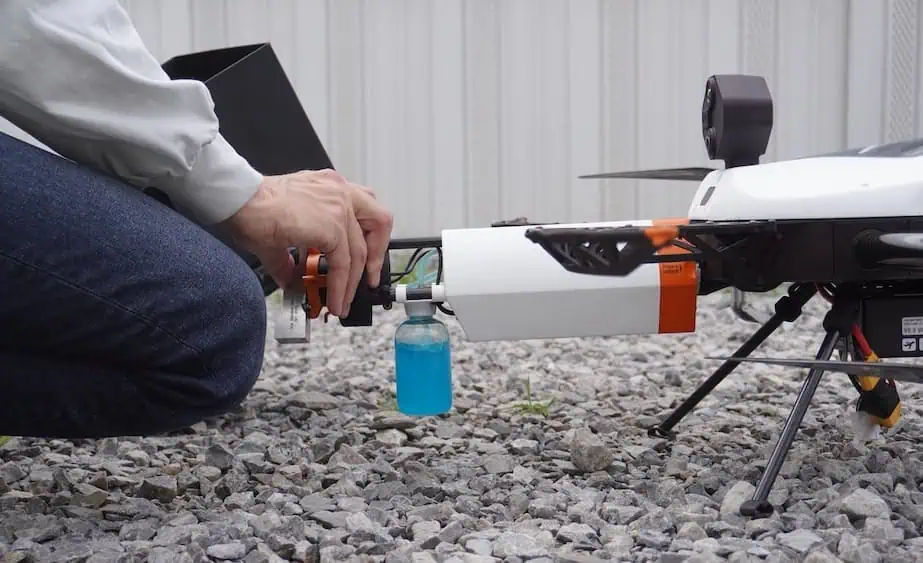
Transducers, which contain piezoelectric elements, convert electrical energy into sound waves and vice versa. They can be handheld or mounted on drones like the Voliro single-element ultrasonic probe and come in various sizes and types:
- Single-element, straight-beam probes: Standard and suitable for coated surfaces.
- dual-element probes: Measure wall thickness using a V-shaped sound path.
- Angle beam probes: Inspect welds at specific angles (e.g., 45°, 60°, 70°).
other ultrasonic testing tools include Ultrasonic Flaw Detectors, Electromagnetic Acoustic Transducers (EMATs), ultrasonic thickness gauges, and phased array scanners.
First-person view during a drone-based acoustic emission test with Voliro T. Source: Voliro.
Voliro Drones in Ultrasonic Testing
Drones have transformed ultrasonic testing by providing safe and efficient access to remote or arduous-to-reach locations. With operators stationed on the ground, these advanced devices facilitate precise defect detection, asset dimension measurement, and thickness evaluation without the need for scaffolding or lifting equipment.
In a recent case study, a Voliro T drone equipped with a UT payload showcased its capabilities by inspecting low-oxygen stainless steel storage tanks, eliminating the necessity for personnel to enter confined spaces.Thanks to its unique force vectoring abilities, the drone can exert up to 3 kg of pressure on surfaces, allowing for highly accurate sensor readings. Inspections of large tanks, as a notable example, can now be completed in as little as three hours.
This streamlined approach reduces the need for additional personnel, safety measures, and scaffolding, resulting in inspection cost reductions of up to 50%.
voliro’s inspection drones also broaden the possibilities of ultrasonic testing. Standard UT probes measure material thickness between 4–150 mm, while the high-temperature UT probe functions effectively at temperatures up to 260°C, negating the need to cool assets during inspections. With omnidirectional flight capabilities, Voliro drones ensure that ultrasonic testing can be performed virtually anywhere, irrespective of height, depth, or confinement of the inspection area.
Read the original article >>