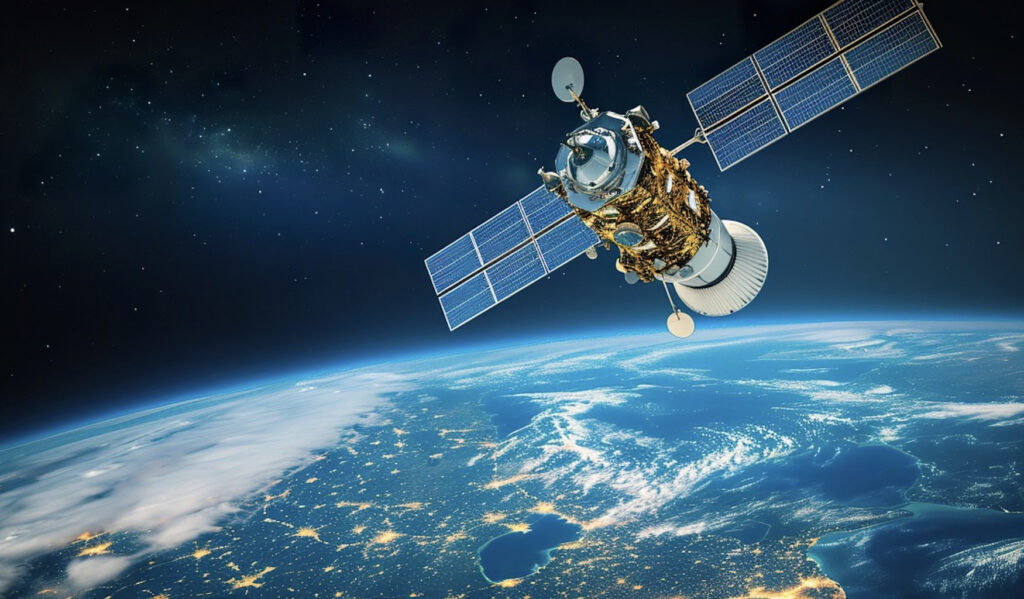
GNSS technology from CHCNAV.
CHCNAV stands as a premier provider of high-precision GNSS solutions, leading the charge in enhancing positioning and navigation capabilities for unmanned systems.
With the growing demand for heightened accuracy in sectors such as drone mapping, autonomous navigation, and precision agriculture, various correction techniques have emerged to boost GNSS performance. This detailed guide from CHCNAV delves into the primary correction methods currently available and their applications in unmanned systems, showcasing how these technologies facilitate accurate positioning across a range of operational settings.
Real-Time Kinematic (RTK) Technology
Real-Time Kinematic (RTK) positioning marks a notable improvement over conventional GNSS methods. While standard positioning typically offers meter-level accuracy, RTK can achieve centimeter-level precision through advanced carrier-phase measurements and real-time error corrections.
single Base RTK Implementation
GNSS base station from CHCNAV.
Single Base RTK is among the most commonly utilized correction methods in the industry. CHCNAV’s iBase station exemplifies a modern approach to RTK, providing a compact and portable solution that is well-suited for unmanned system operations. This system utilizes a base station located at a known fixed point,which collaborates with a rover receiver mounted on the unmanned platform. Continuous real-time correction data is exchanged between these two components, enabling highly accurate positioning.
The benefits for unmanned systems are notable. Users can achieve accuracy levels ranging from centimeters to millimeters, making it ideal for detailed navigation and mapping tasks. The flexible deployment options allow operators to quickly establish and relocate the base station as necessary, while the one-time investment model eliminates ongoing subscription fees. This method is particularly effective in controlled operational areas where consistent accuracy is vital for mission success.
Network RTK Advantages
Network RTK enhances customary RTK by employing multiple permanent base stations to cover expansive areas. This networked strategy is especially beneficial for autonomous vehicle operations and large-scale drone mapping projects, where consistent accuracy across vast regions is essential.
The system ensures seamless coverage over wide areas, removing the need for operators to reset and reconnect to new base stations as they traverse different regions. this continuous connectivity makes it an ideal solution for autonomous navigation in urban settings,where reliable positioning is crucial for safe operations. the network approach guarantees consistent accuracy over large areas, maintaining centimeter-level precision regardless of the scale of the operation.
PPP and PPP-RTK Techniques
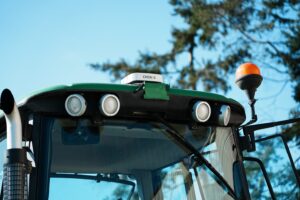
A John Deere Tractor with CHCNAV NX510SE Auto Steering System.
Precise Point Positioning (PPP) and its RTK variant provide distinct advantages for unmanned systems operating in remote locations. These methods utilize satellite-based corrections, making them particularly useful for long-range drone operations that extend beyond the reach of traditional RTK networks. Maritime autonomous systems benefit from global coverage, while surveying operations in remote areas can maintain precise positioning without local infrastructure. This technology is especially advantageous in regions with limited cellular coverage, where conventional network-based solutions may falter.
CHCNAV’s advanced GNSS receivers are compatible with both PPP and PPP-RTK corrections, offering flexible deployment options for various operational environments.
Post-Processing Kinematic (PPK) Methodology
Post-Processing Kinematic (PPK) has gained prominence in the unmanned systems sector, particularly for drone mapping applications. CHCNAV’s CGO2.0 software delivers robust post-processing capabilities that ensure superior accuracy in challenging environments where real-time corrections may be unreliable. This system provides highly reliable corrections for aerial mapping missions, enabling operators to achieve consistent results even under difficult conditions.Its extended baseline capabilities allow operations over greater distances from the base station while maintaining high precision, making it ideal for mapping projects over water bodies or in mountainous regions where real-time dialog links can be problematic.
Selecting the Appropriate GNSS Correction Method
When choosing a GNSS correction method for unmanned systems, several critical factors must be taken into account:
The operational surroundings is a key determinant in identifying the most effective correction method. Urban areas with robust infrastructure may benefit from network RTK solutions, while remote locations might necessitate PPP or PPK approaches. The specific terrain characteristics and overall coverage requirements will influence which solution delivers optimal performance.
Accuracy requirements should be assessed against operational needs. Some applications require real-time centimeter-level precision, while others can function effectively with post-processed results. The consistency of accuracy across the entire operational area is particularly crucial for large-scale autonomous operations.
Operational constraints considerably influence the final decision. The availability of communication infrastructure in the operational area, budget considerations including both initial investment and ongoing costs, and the technical expertise available within the team all play a role in determining the most suitable correction method.
Future Trends in GNSS Technology
CHCNAV BB4 Drone and AA15 Airborne lidar.
The unmanned systems sector continues to spur innovation in GNSS technology. CHCNAV is at the forefront of this evolution, developing solutions that integrate multiple correction methods to deliver optimal positioning performance across various operational scenarios.
As autonomous operations become increasingly common, the integration of these correction methods with advanced navigation systems will be vital in enabling precise, reliable, and safe unmanned system operations across diverse industries.
Whether you are operating mapping drones,autonomous ground vehicles,or other unmanned platforms,understanding and implementing the appropriate GNSS correction method is essential for prosperous operations. CHCNAV’s extensive range of GNSS solutions offers the flexibility and precision required to meet these varied demands in the unmanned systems field.