

Tyto Robotics delves into pivotal research that investigates how propeller imbalance correlates with UAV vibration, revealing essential insights into when this issue escalates and how it can be effectively mitigated. Discover more > >
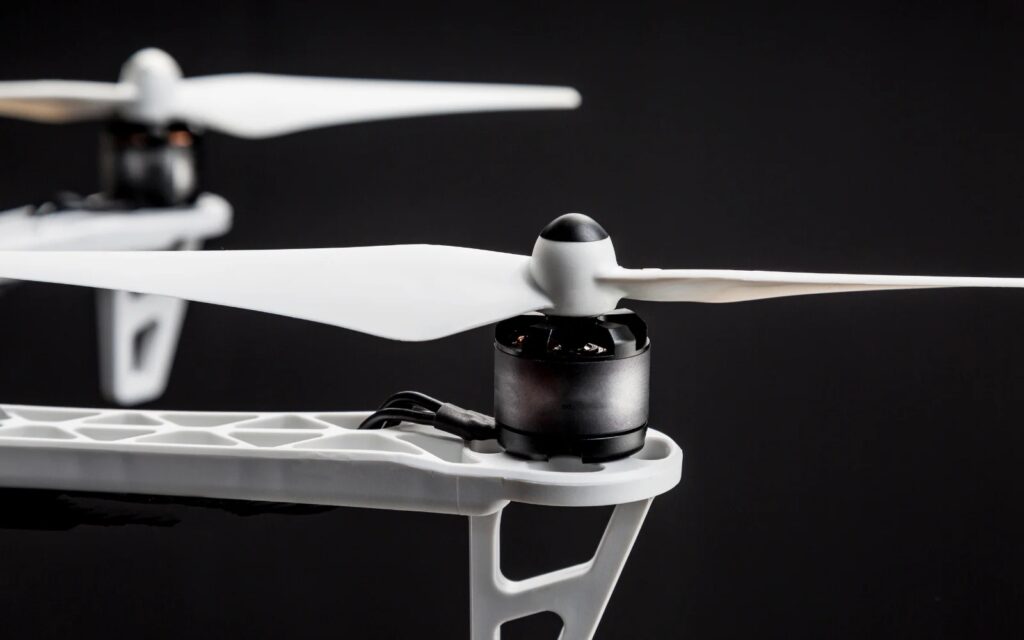
Vibration is a stealthy adversary that undermines UAV performance, resulting in diminished flight efficiency, shaky video recordings, and accelerated wear on vital components. A frequently overlooked culprit? Imbalanced propellers. An uneven mass distribution across a propeller’s blades leads to instability, which exacerbates at higher speeds. This imbalance can either originate from the manufacturing process or develop over time due to damage during transport or operation.
Understanding the Effects of imbalance on UAV Vibration
Studies indicate that propeller imbalance has a profound impact on vibration, with effects becoming more pronounced as RPM and propeller size increase.A notable examination by Kuantama (2019) utilized laser Doppler vibrometry to assess vibration in UAV propellers under controlled settings. The results demonstrated that as RPM rose, the intensity of vibration due to imbalance also increased—particularly in larger propellers.
As a notable example, at 5000 RPM, a 13-inch propeller with imbalance showed a 12% increase in vibration velocity compared to a balanced counterpart. In contrast, a 14-inch propeller exhibited a staggering 33% rise in vibration velocity due to imbalance. The research also highlighted a significant spike in vibration at RPMs exceeding 4000,marking a critical threshold where imbalance becomes a serious issue.
Another investigation by Salem et al. (2025) concentrated on identifying imbalance-induced vibrations in UAVs under real-world conditions. Researchers simulated imbalance by loosening a propeller blade screw and monitored the resulting vibrations using MEMS sensors affixed to the UAV. Their machine learning model effectively recognized the distinct vibration patterns associated with imbalance, revealing significant deviations across all three axes (X, Y, and Z). Notably, vibration peaks on the X-axis surpassed 2g, posing substantial risks to UAV stability and structural integrity.
The findings underscored that neglecting propeller imbalance could lead to erratic flight behavior and heightened chances of mechanical failure.
Strategies to Reduce UAV Vibration
In light of the documented effects of propeller imbalance, implementing effective balancing solutions is essential. The research emphasizes two critical points:
Larger propellers are more prone to vibration challenges, making balance correction imperative. Additionally, vibration escalates considerably at higher RPMs, indicating that UAVs operating at elevated speeds require meticulous attention to balance.
Tyto Robotics has introduced an advanced dynamic propeller balancing system that allows users to swiftly identify and rectify imbalances with ISO-grade accuracy. by proactively addressing propeller balance, operators can markedly decrease vibration, enhance flight stability, and prolong the lifespan of their UAVs.
To gain further insights into how propeller imbalance affects UAVs, download Tyto Robotics’ extensive whitepaper.