

Wavefront Systems highlights the escalating risks posed by unmanned vehicles in underwater environments, alongside the introduction of the Sentinel IDS, a compact and lightweight detection system designed for identifying threats in shallow waters across extensive areas.
In today’s interconnected world, the economic vitality and expansion of nations heavily rely on the utilization of our oceans and seas. With approximately 96% of global trade transported via maritime routes, ensuring the security of these waterways is paramount. Consequently, safeguarding our seas, ports, harbors, and offshore installations remains a top priority for both governmental bodies and private enterprises.
Criminals and terrorists have long recognized the challenges associated with securing vast expanses of water, exploiting these vulnerabilities for their illicit activities. In recent years, underwater attacks primarily involved divers, but the landscape of underwater threats is evolving.The ongoing geopolitical tensions, notably the conflict in Ukraine, have heightened concerns about potential terrorist attacks targeting Critical National Infrastructure (CNI).
Are We Entering a New Era of Warfare?
The threats facing naval forces, critical infrastructure, private maritime assets, and global political stability are continuously transforming. This evolution encompasses both advanced technologies and traditional threats that can be more challenging to detect.
While drone threats are often associated with aerial operations, countermeasures have been developed to address a wide array of drone types, from small DIY devices to large, elegant UAVs. As these threats have rapidly advanced, security and defense agencies have adapted their technologies to protect personnel and assets.
Currently, the underwater domain is witnessing a surge in threats from unmanned platforms, presenting a unique set of challenges for detection systems and countermeasures.
Surface threat detection can be managed through various means, including CCTV, FLIR (Forward Looking InfraRed) radar, and access control systems. Though, the underwater habitat offers adversaries a covert setting where visibility, terrain, noise, and natural marine life complicate threat detection and classification, leaving vessels and crews vulnerable to attacks.
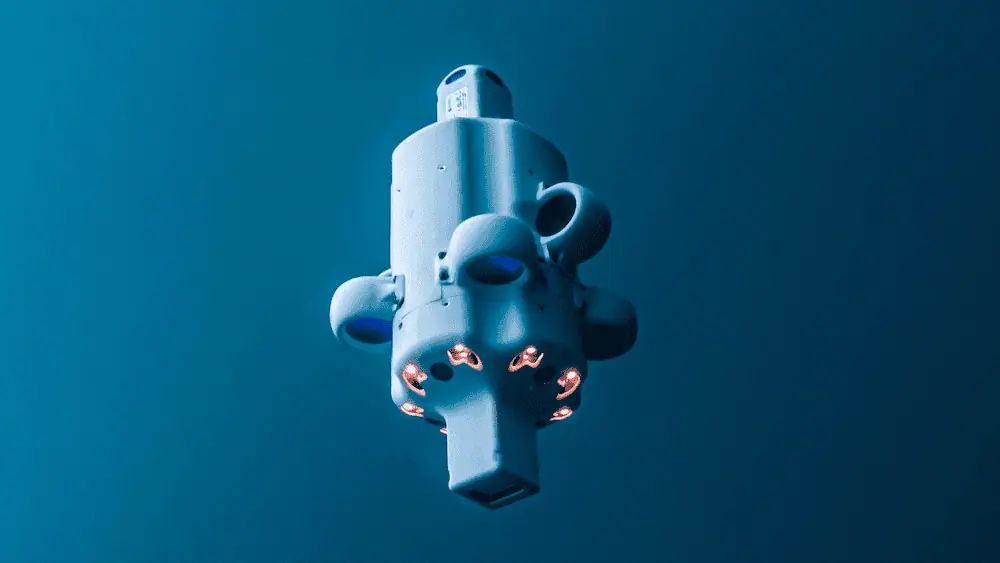
The underwater realm is no longer exclusively occupied by large,manned submarines; autonomous,agile Unmanned Underwater Vehicles (UUVs) are emerging as meaningful threats. If the development of these UUVs progresses at a pace similar to that of aerial drones, it becomes crucial to equip ourselves with the necessary technologies and expertise to detect, classify, and track these new threats.
The evolving Nature of Underwater Threats
The advancement of unmanned underwater platforms has accelerated,with numerous academic institutions actively testing UUV technologies alongside their proprietary software. The current state of underwater technology mirrors the early days of aerial drones a decade ago, yet commercial availability remains limited due to high costs. Nonetheless,the threat posed by these platforms is real and evolving,necessitating that detection technologies and countermeasures keep pace.
A key distinction between surface and underwater drones lies in navigation; GNSS (Global Navigation Satellite System) does not function underwater, complicating accurate positioning. Visibility is severely limited, making it tough to utilize cameras and radars for threat detection in an environment that is inherently challenging to assess. Effectively identifying underwater intruders is notoriously difficult. For instance, combat divers are small and silent, while UUVs are fast-moving and hard to track.
Traditional underwater detection methods rely on acoustics and sonar, but these techniques face significant challenges in strategic locations like ports and harbors, where numerous vessels and personnel might potentially be at risk. These areas are often characterized by high levels of noise from large vessels and active depth sounders,complicating detection efforts. Additionally, the relatively calm waters create complex thermal structures, making it difficult to rely on a low reverberation seabed. In congested port environments,the sound velocity profile is constantly changing.
Detection is only part of the challenge; once a target is identified, it must be accurately classified to differentiate between marine life and potential threats. Misidentifying a harbor seal as a terrorist diver or UUV could have severe consequences.
Knowledge is Essential for Underwater Security: Awareness is Key
To effectively address these challenges, new technologies must leverage comprehensive technical knowledge and monitoring capabilities to identify, classify, and track a variety of emerging threats. A deeper understanding of the underwater threat landscape enhances protective measures.
As a leader in subsea technology, Wavefront Systems has sought to tackle these challenges by introducing a portable, lightweight detection system capable of identifying threats in shallow waters across extensive ranges.
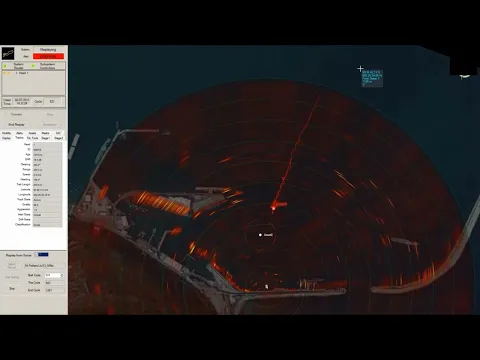
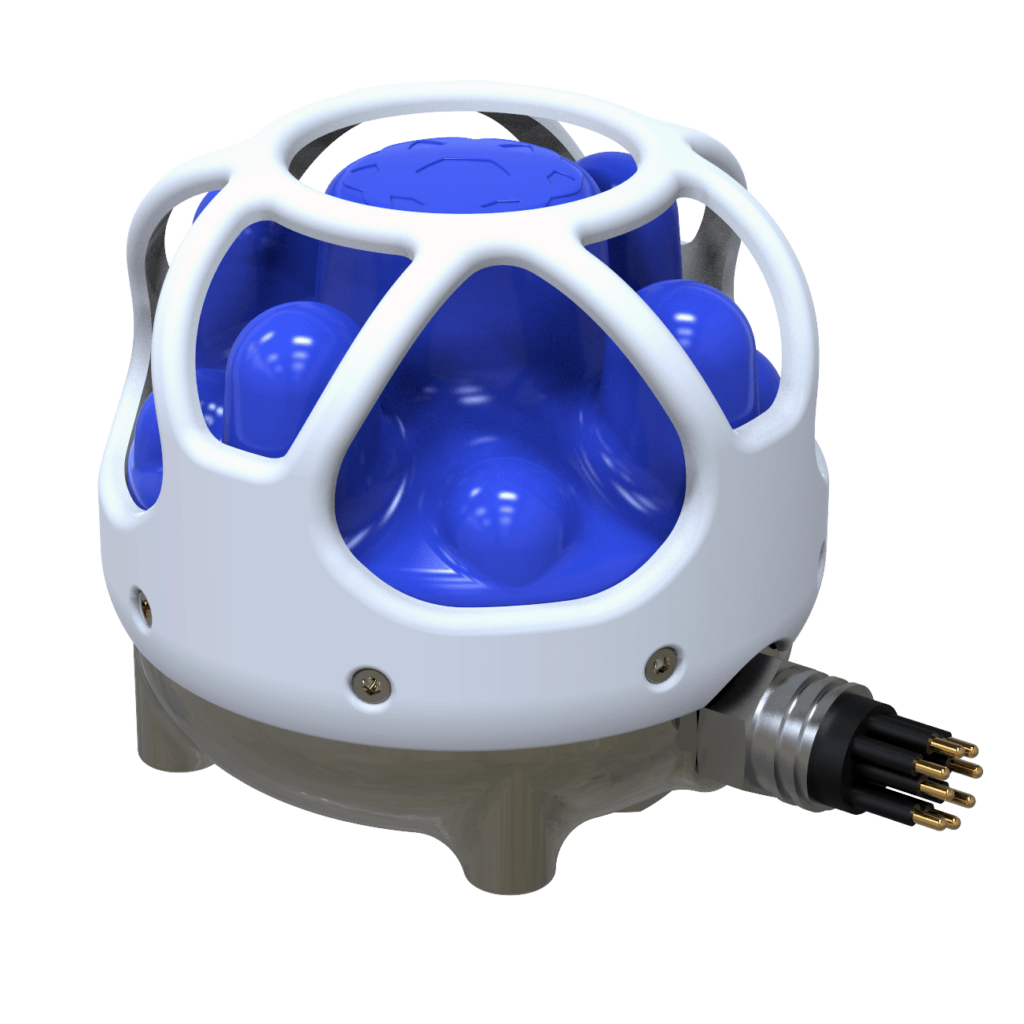
The result is the Sentinel IDS system, which emits a 360° Linear-Period-Modulated (LPM) pulse and utilizes 256 receive beams evenly distributed around it’s perimeter to detect and differentiate targets at distances of up to 1,500 meters. This system can be rapidly deployed in its portable format as a standalone sonar or integrated into a network of sonars to secure a permanent wide-area perimeter.
Innovative Simultaneous Active and Passive Sonar Capability: SInAPS®
The Sentinel IDS now incorporates passive detection capabilities. The Simultaneous Active and Passive sonar technology, known as sinaps, represents Wavefront’s cutting-edge approach within the Sentinel system. This innovative method combines the strengths of both tracking techniques by utilizing the same acoustic array for active and passive processing simultaneously within the same operational band. This allows for the tracking of discrete and obscured targets that traditional active sonars might miss, effectively leaving no threat unmonitored.
Wavefront is committed to applying new technologies, extensive technical expertise, and unparalleled understanding of underwater monitoring to analyze the subsea environment, enabling the identification, classification, and tracking of a diverse range of threats to ensure asset protection.
Discover more about the Sentinel IDS – Underwater Intruder Detection Sonar>