

Revolutionizing Mapping: LiDAR USA Chooses VectorNav’s VN-300 INS
LiDAR USA has announced the integration of vectornav’s VN-300 Dual-Antenna Inertial Navigation System (INS) into its ScanLook Revolution unmanned aerial vehicle (UAV) mapping solution. this collaboration aims to enhance LiDAR (Light Detection and Ranging) mapping capabilities, catering to sectors that demand a swift, efficient, and user-friendly approach.
Overcoming Legacy LiDAR Limitations
Historically, the size, weight, and power demands of conventional LiDAR mapping systems restricted their request to manned aircraft.The high costs associated wiht hardware and operations necessitated extensive mapping areas to justify expenses. though, recent technological advancements in both LiDAR and inertial navigation have paved the way for compact mapping systems that weigh only a few hundred grams and can easily fit in one’s hand. This evolution has made LiDAR technology accessible to small enterprises, allowing them to create profitable services around it.
Essential Components for Mobile LiDAR Mapping
Effective mobile LiDAR mapping relies on a harmonious integration of several key components: a LiDAR scanner, an attitude/orientation sensor, a positioning system, a timing reference, and a mobile platform.Traditionally, users faced the challenge of either assembling these components individually or investing in costly pre-configured systems designed for surveying, which frequently enough included L1/L2 GPS receivers with RTK (Real-Time Kinematics) capabilities for centimeter-level accuracy. Such systems typically required additional infrastructure to communicate with reference base stations or networks to maintain precision.
Introducing the ScanLook Revolution
Recognizing a gap in the market for an affordable and user-friendly mapping solution, LiDAR USA leveraged its 18 years of expertise in LiDAR mapping and surveying to create the ScanLook Revolution system. This innovative system is designed to meet diverse mapping needs without necessitating advanced training, complex setups, or expensive post-processing.
Why VN-300 INS stands Out
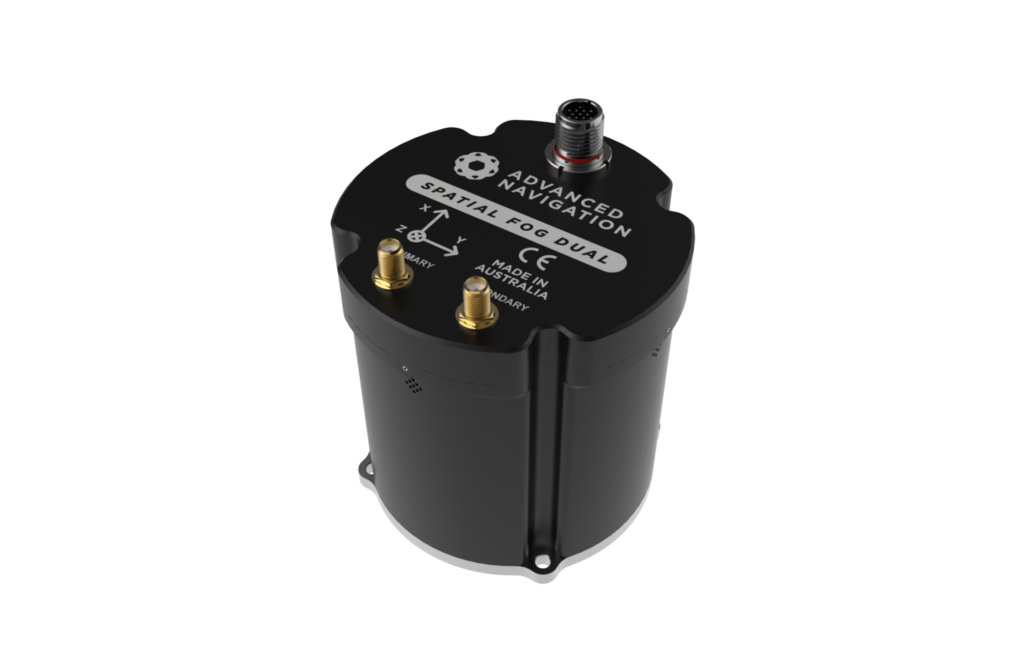
To ensure the Revolution system remains compact, precise, and feature-rich, LiDAR USA partnered with VectorNav to incorporate the VN-300 Dual-Antenna INS. Jeff Fagerman,CEO of LiDAR USA,remarked,“We assessed numerous inertial navigation systems,but the VN-300 distinguished itself with its outstanding performance across various operating conditions,particularly due to its compact size and lightweight design. Weighing just 30 grams, the VN-300 delivers performance akin to much pricier alternatives.”
One of the key reasons for selecting the VN-300 was its independence from magnetometers for heading estimation. Jakub Maslikowski, Director of Sales and Marketing at VectorNav, noted, “Relying on magnetometers for accurate heading can frequently enough lead to notable challenges.” The VN-300 employs two GNSS receivers and a method called carrier Phase Interferometry, allowing it to determine heading solely from GPS signals when stationary.
Challenges and Customization in Progress
The development of the Revolution system was a complex process that involved extensive experimentation and refinement. “Collaborating with the VN-300 and the VectorNav team has been a fantastic experience. They are responsive, highly knowledgeable, and a pleasure to work with,” Fagerman added.The Revolution is available in various configurations, allowing for customization to meet specific customer needs.LiDAR USA is focusing on applications in law enforcement for accident scene analysis, archaeology, and encroachment monitoring, and has received positive feedback regarding the revolution’s performance.
Mapping Applications and Features
Fagerman explained, “The Revolution system is tailored for mapping scenarios where relative position measurements are more critical than absolute centimeter-level accuracy. As an example, when assessing vegetation encroachment on power lines, the relative distance between the power line and tree branches is more significant than pinpointing the tree’s exact location with 2cm precision.”
The Revolution system comprises a LiDAR scanner, an Inertial Navigation system (INS), onboard data logging, and a WiFi interface for remote operation. Users simply need to mount the unit, attach GPS antennas, and provide power to get started.