

Sierra-Olympia Technologies has announced that its optical gas imaging (OGI) cameras adhere to the standards set forth in OOOOa, OOOOb, OOOOc, and Appendix K regulations.
These regulations establish the baseline criteria for the detection and visualization capabilities of OGI cameras. Below, we detail the testing methodology employed to verify compliance with these standards.
Initially, OOOA set a detection threshold of 60 grams per hour for a gas mixture of 50% methane and 50% propane, which translates to approximately 10,000 parts per million (PPM).
The revised EPA regulations now concentrate on three primary gases: methane, propane, and butane. Under the new oil and gas guidelines, the visualization thresholds are set at 19 grams per hour for methane, 22 grams per hour for propane, and 29 grams per hour for butane.
Introducing the Ventus OGI
The Ventus OGI is capable of detecting these three gases, along with 19 additional hydrocarbon gases. While it can visualize these gases, it does not differentiate between them; all gases will appear uniformly in the camera’s display.
Typically, users are aware of the specific gases present in their systems and pipelines.In the event of a leak, they can accurately identify the gas that is escaping.
For a comprehensive list of detectable gases, please refer to the Ventus OGI product page >>
New Requirements Under Appendix K
Appendix K now necessitates the establishment of an operating index and envelope by end users, operators, manufacturers like Sierra-Olympia Technologies, or service providers.
When utilizing an OGI camera, especially as an alternative to Method 21 sniffers, it is crucial to validate the data collected and the results obtained. During the recent Appendix K validation tests, Sierra-olympia adopted the EPA’s methodology to serve as a model for others. Notably, Sierra-Olympia is reportedly the first company in the U.S. to implement this validation process.
Essential parameters for OGI performance, audits, required equipment, facility inspections, record-keeping, and field conditions were clearly defined.
Defining the Operating Envelope
Summary of OGI Performance
Documented evidence that the OGI camera operates as specified within the defined Operating Envelope.
Validation of Field Conditions
Establish the necessary environmental data for validation purposes.
Performance Audits
Provide proof that the Operating Envelope was not exceeded during operations.
Record Keeping
Maintain documentation demonstrating compliance with the Operating Envelope during inspections.
Essential Supplies
List the necessary items required for conducting inspections.
Inspection requirements, Monitoring Plan, and Training Plan
Outline the essential components of the monitoring strategy.
These testing parameters and the operating envelope were established to ensure that the camera meets leak detection and repair (LDAR) inspection standards. Many companies do not conduct tests with this level of detail, often focusing solely on identifying and repairing leaks rather than quantifying their magnitude. If an auditor discovers a leak before the operator does, fines can be retroactively applied to the last inspection, leading to significant penalties.
In the Appendix K validation tests, conditions included wind speeds from 0 to 10 m/s (0-22 mph), distances ranging from 2 to 25 meters (6 to 82 feet), and Delta T values between 1 and 15°C. Two lens options—25mm and 50mm—were utilized, and three camera operating modes were assessed: AGC (Standard), CLAHE (Contrast Limited Adaptive Histogram Equalization), and GEM (Gas Enhancement Mode).
Additionally, three levels of digital zoom were tested: 2X, 4X, and 8X. These evaluations determined the conditions under which the Ventus OGI could detect a 22 g/hr methane leak.
Testing Parameters Overview
Wind Speed
0 – 10 m/s
Digital Zoom Levels
2X, 4X, 8X
Distance Range
0 – 25 m
Camera Operating modes
AGC (Standard), CLAHE, GEM
Delta-T Range
1°C – 15°C
Lens Options
25mm and 50mm
These variables can substantially influence detection capabilities. Monitoring from greater distances can affect leak detection accuracy. In some instances, gas leaks were identified from distances of up to 1,000 feet, but these measurements were in kilograms per hour rather than grams per hour.
One of the most straightforward methods to validate the Ventus OGI camera is through the use of Porta Gas bottles containing a 50/50 methane-propane mixture or propane cylinders commonly used for grilling or camping. Calibrated regulators set to either 60 grams per hour or 6 grams per hour are utilized for testing.
Operators can place the bottle 6 to 10 feet from the camera and gradually increase the distance until the gas leak is no longer detectable. This procedure helps establish the camera’s operating envelope under varying weather conditions, including wind, sunlight, overcast skies, or light rain.
Both the EPA and air quality regulatory bodies require facilities or manufacturers to define these criteria to ensure operators understand their equipment’s limitations during LDAR inspections, whether using aerial, handheld, fixed, or continuous monitoring OGI systems.
The results indicated that as temperature differentials increase, visibility improves. Conversely, higher wind speeds lead to gas dispersion, which diminishes visibility. Similarly, visibility decreases with distance. utilizing telephoto or longer, narrower field-of-view optics can definitely help mitigate some of these challenges. For instance, with a 25mm lens, these principles generally apply, but switching camera modes can enhance performance.
Key Observations
- Increased temperature differentials enhance visibility.
- higher wind speeds diminish visibility.
- Greater distances reduce visibility.
Images captured in AGC, CLAHE, and GEM modes illustrate how CLAHE improves contrast and edge definition compared to Standard mode. GEM mode, which colorizes gas, further enhances visibility, allowing for the detection of the same leak from twice the distance in certain scenarios.
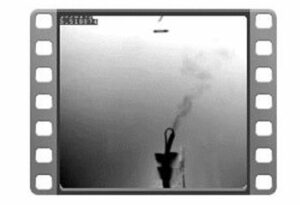
Standard Mode
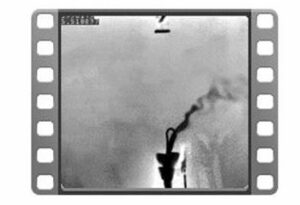
CLAHE Mode
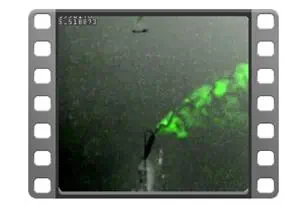
GEM Mode
Read the original article here >>