

-
by defencesource
- March 14, 2026
- 0 Comments
Top 10 Defence Products of 2026: Next-Generation Combat Systems Reshaping Modern Warfare

By Defence Source Editorial Team | Published March 13, 2026 | Reading time: 8 minutes
Introduction
But here’s what most people miss: the defence industry continues to evolve at an unprecedented pace, with 2026 marking a pivotal year for military technology innovation. From advanced infantry fighting vehicles to autonomous robotic combat systems, defence manufacturers worldwide have unveiled groundbreaking platforms that promise to redefine the battlefield of tomorrow. This comprehensive analysis examines the top 10 defence products that emerged in 2026, showcasing the technological marvels that are setting new standards for combat effectiveness, soldier protection, and operational flexibility.
Key Highlights
- AI-Powered Combat Systems: Integration of artificial intelligence across multiple platforms enables faster decision-making and autonomous threat response
- Modular Weapon Platforms: Reconfigurable systems allow rapid adaptation to changing mission requirements without extensive maintenance downtime
- International Collaboration: NATO-standard architectures facilitate interoperability between allied forces across land, air, and sea domains
The Top 10 Defence Products of 2026
1. General Dynamics Ajax Infantry Fighting Vehicle (United Kingdom)
Look. Let me be clear. The Ajax represents the British Army’s most ambitious armored vehicle program in decades. Built on a proven chassis with enhanced digital integration, this IFV delivers exceptional battlefield awareness through its advanced sensor suite and networked communication systems frankly, a game-changer.
Key Features:
– 40mm CTAS cannon with telescoping ammunition
– Advanced battlefield management system
– Enhanced crew protection with modular armor packages
– Digital cockpit with 360-degree situational awareness
2. Patria TRACKX All-Terrain Armored Personnel Carrier (Sweden)
Patria’s TRACKX has emerged as a versatile platform for Nordic and European defense forces, combining amphibious capability with exceptional mobility across challenging terrain.
Key Features:
– Full amphibious capability without preparation
– Digital cockpit with drone connectivity
– Modular mission bay for various configurations
– Hybrid propulsion system for reduced thermal signature
3. ST Engineering GDAMS – Ground Deployed Advanced Mortar System (Singapore)
This automated mortar system represents a significant leap in indirect fire support, featuring fully automated loading and targeting mechanisms that dramatically reduce response times.
Key Features:
– Fully automated loading and targeting
– UAV spotter integration for precision fire
– Rapid deployment from transit to firing position
– Advanced fire control computer with multiple ammunition compatibility
4. MOOG RIWP – Reconfigurable Integrated Weapons Platform (United States)
The bottom line? mOOG’s innovative platform takes modularity to new heights, allowing operators to swap weapon systems in the field without specialized tools or extensive training which, honestly, surprised me quite remarkable, actually.
Key Features:
– Plug-and-play weapon system compatibility
– AI-assisted fire coordination and threat prioritization
– Stabilized platform for moving engagements
– Remote operation capability for high-risk scenarios
5. Milrem Robotics HAVOC 8×8 Robotic Combat Vehicle (Estonia)
The HAVOC exemplifies the future of unmanned ground combat, operating autonomously or under remote control to reduce risk to human soldiers in dangerous missions not that anyone’s complaining something I didn’t expect.
Key Features:
– Autonomous navigation powered by deep-learning algorithms
– Interoperability with NATO C4ISR networks
– 8×8 all-terrain mobility with independent suspension
– Modular payload system for weapons, sensors, or cargo
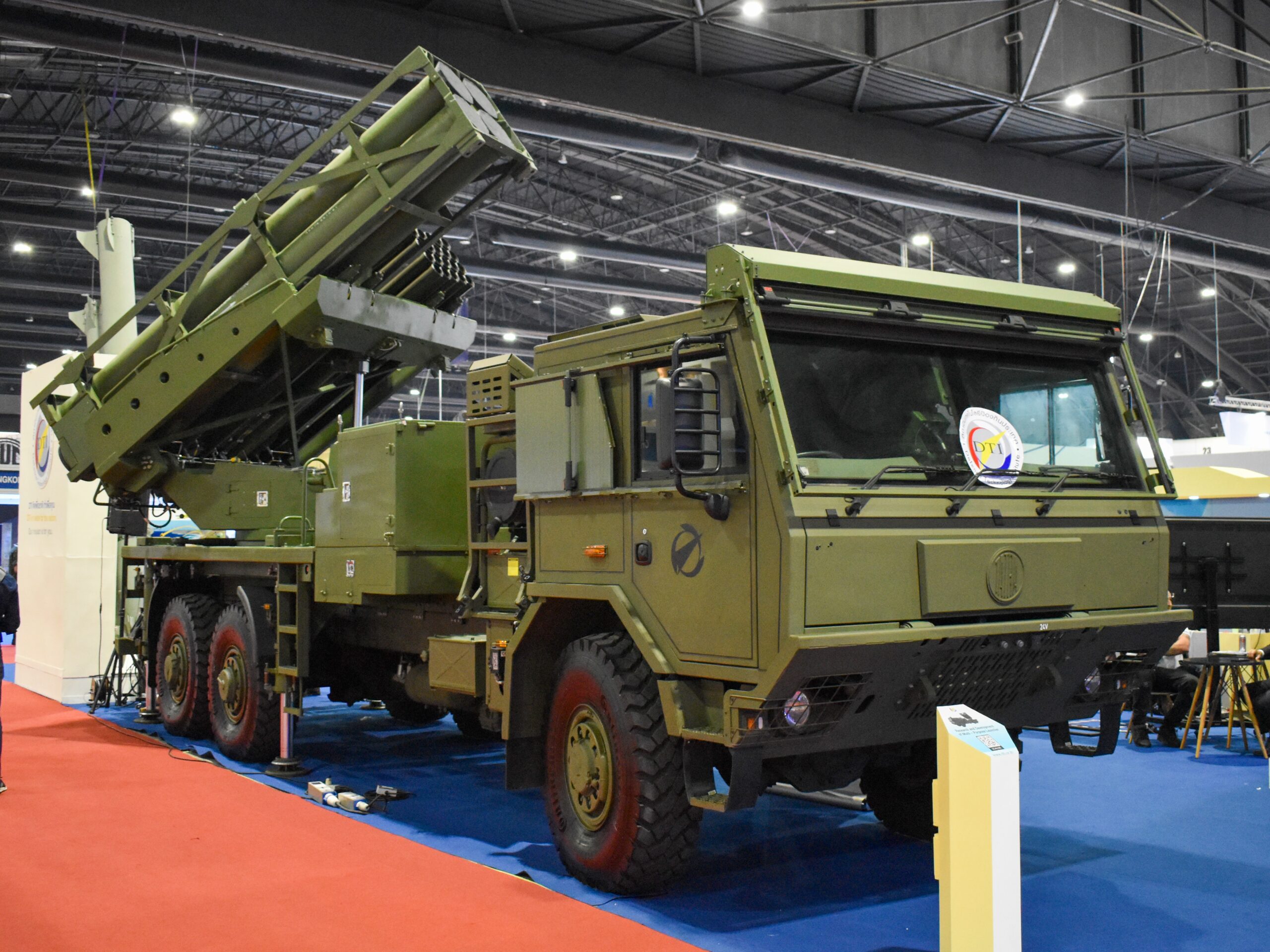
6. Rheinmetall Fuchs JAGM Mobile Vertical Launching Missile System (Germany)
Here’s the thing: rheinmetall’s integration of the Joint Air-to-Ground Missile system onto the proven Fuchs chassis creates a highly mobile anti-armor platform for modern mechanized forces.
Key Features:
– Vertical launch capability for all-weather engagement
– Fire-and-forget missile technology
– Networked targeting data from multiple sources
– Rapid reload capability under armor protection
Technical Specifications Comparison
| System | Country | Weight | Crew | Primary Armament | Autonomy Level |
|---|---|---|---|---|---|
| Ajax IFV | UK | 38 tonnes | 3 | 40mm CTAS | Semi-autonomous |
| TRACKX APC | Sweden | 12 tonnes | 2+8 | Modular | Connected |
| GDAMS | Singapore | 8 tonnes | 2 | 120mm Mortar | Automated |
| RIWP | USA | 5 tonnes | 1-2 | Modular | AI-assisted |
| HAVOC 8×8 | Estonia | 10 tonnes | 0 | Modular | Fully autonomous |
| Fuchs JAGM | Germany | 23 tonnes | 3 | JAGM Missiles | Networked |
Industry Impact and Strategic Implications
The defence products showcased in 2026 reflect several critical trends shaping the future of military operations:
1. Autonomous Operations: The shift towards unmanned and semi-autonomous systems reduces risk to personnel while enabling new tactical approaches. Milrem Robotics’ HAVOC demonstrates how AI can navigate complex terrain and coordinate with manned platforms.
2. Digital Integration: Modern combat vehicles are essentially networked computers on tracks or wheels. The ability to share targeting data, coordinate fire, and maintain situational awareness across distributed forces is now a baseline requirement.
3. Modular Design: Defense budgets face constant pressure, making platforms that can adapt to multiple roles increasingly attractive. MOOG’s RIWP and Patria’s TRACKX exemplify this philosophy.
4. International Standardization: NATO architecture compatibility ensures that allied forces can operate seamlessly together, a critical capability given current geopolitical tensions.
Expert Opinion
“The technologies we saw in 2026 represent more than incremental improvements—they fundamentally change how we think about ground combat,” notes Dr. Sarah Mitchell, defense technology analyst at the International Institute for Strategic Studies. “The integration of AI, autonomous navigation, and networked communications creates force multipliers that were science fiction just a decade ago.”
Real talk: industry observers point out that the pace of innovation is accelerating. What took decades in previous eras now happens in years, driven by commercial technology spillover from the automotive, aerospace, and consumer electronics sectors.
Looking Ahead: 2026 and Beyond
As we move into 2026, several trends warrant attention:
- Counter-Drone Systems: With UAV proliferation, integrated air defense at the tactical level becomes essential
- Directed Energy Weapons: Laser systems for drone defense and counter-rocket applications are reaching operational maturity
- Hybrid Propulsion: Reduced fuel logistics and thermal signatures make electric and hybrid drives increasingly attractive
- Augmented Reality: Enhanced soldier systems using AR for navigation, targeting, and information display
Conclusion
The top defence products of 2026 demonstrate that the future of ground combat is here. From British infantry fighting vehicles to Estonian robotic combat platforms, these systems share common themes: enhanced protection, greater mobility, improved situational awareness, and increasing autonomy. For defense planners and military professionals, understanding these capabilities is essential for preparing for the conflicts of tomorrow.
The reality is. As nations continue to invest in defense modernization, the technologies showcased in 2026 will form the backbone of armed forces worldwide. The question is no longer whether autonomous, networked, AI-enabled combat systems will dominate the battlefield—but how quickly militaries can adapt their doctrines and training to leverage these revolutionary capabilities.
Tags: defence technology, military vehicles, combat systems, 2026 defence products, autonomous vehicles, NATO, military innovation, armored vehicles, robotic warfare, defence industry
Categories: Defence Technology, Military Vehicles, Industry Analysis, Combat Systems
Sources:
– Army Recognition – Top 10 Defense Products of 2026 Analysis
– Defence Industries – Emerging Technologies Report 2026
– NATO Defence Technology Trends Publication
– Manufacturer Technical Specifications and Press Releases